Endemic flora U-Z
Looking at the photographs To view the photographs, click on the species image to enlarge it,
then use the side arrows to page through images of the flowers, buds, fruit, leaves, foliage and plant(s) in the wild etc.
Viewing the meaning of botanical words To view the meaning of botanical words, hold the cursor on the blue word and the meaning will appear in a text box. On phones, turn to landscape to view all.
Based on Debenham C’s, The Language of Botany, A Publication of The Society for Growing Australian Plants, Chipping Norton NSW, c.1962.
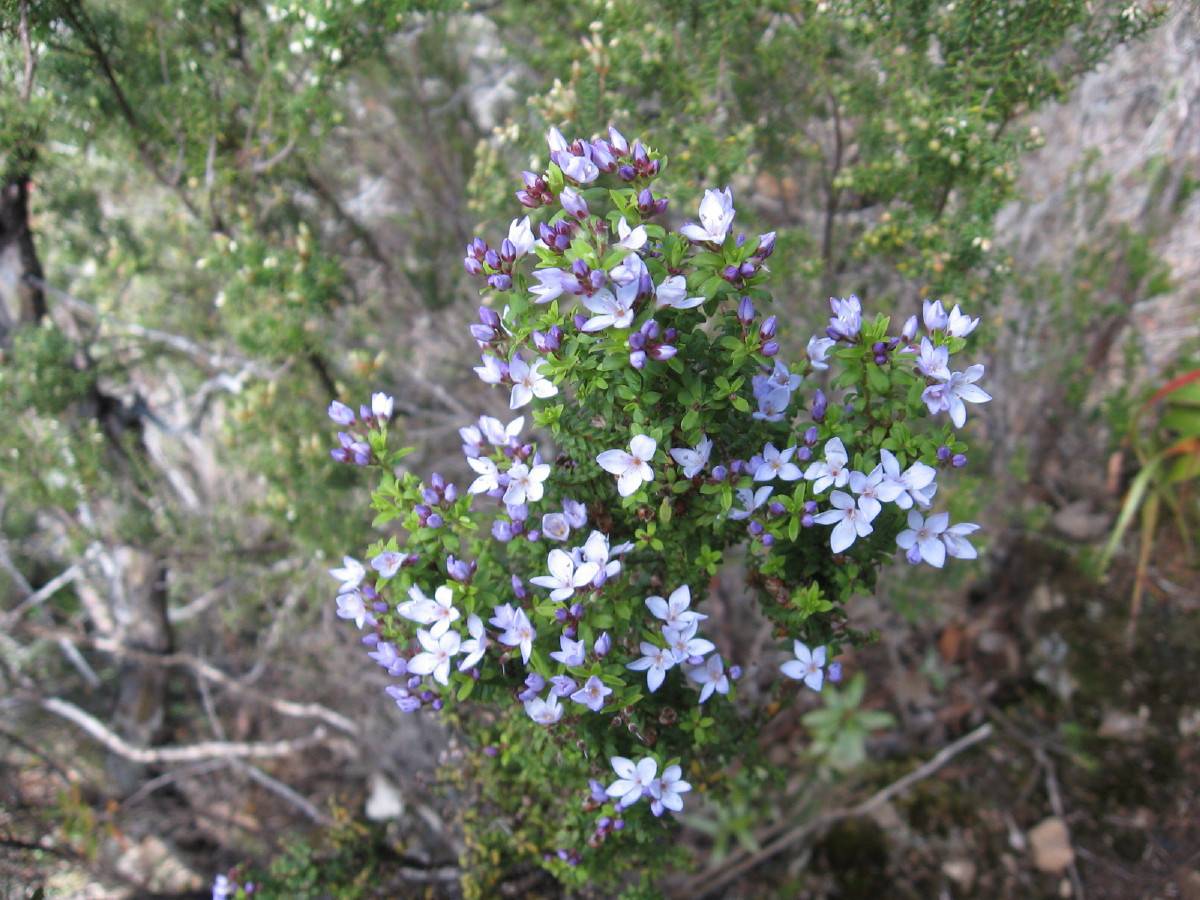
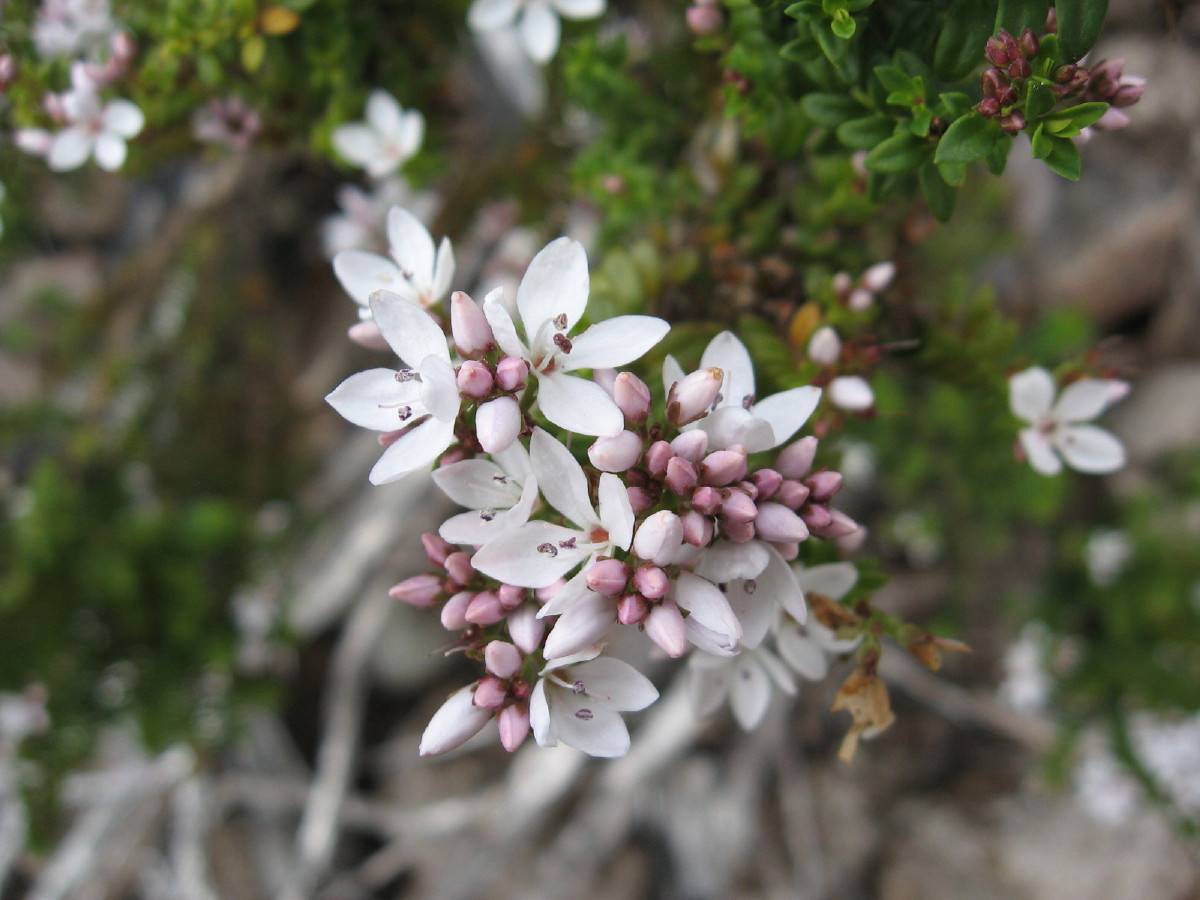
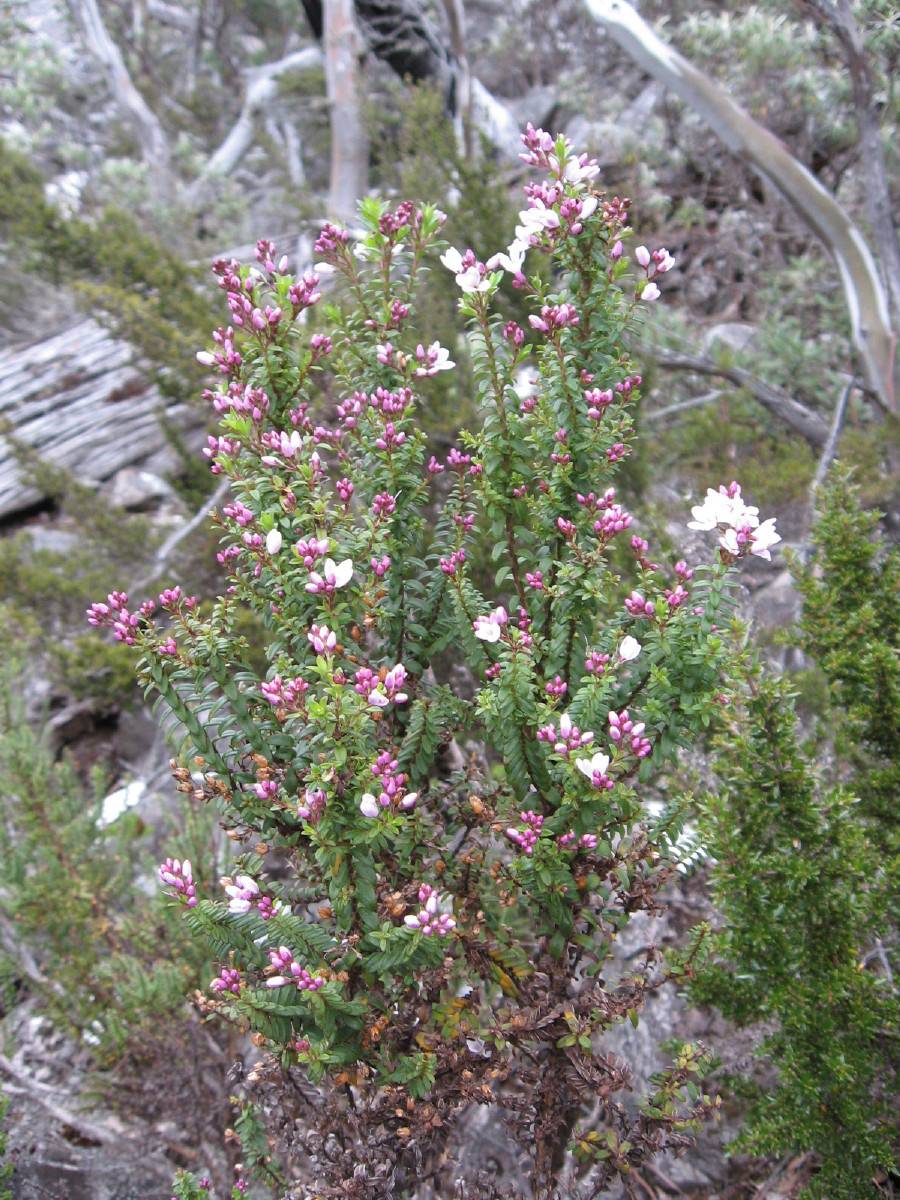
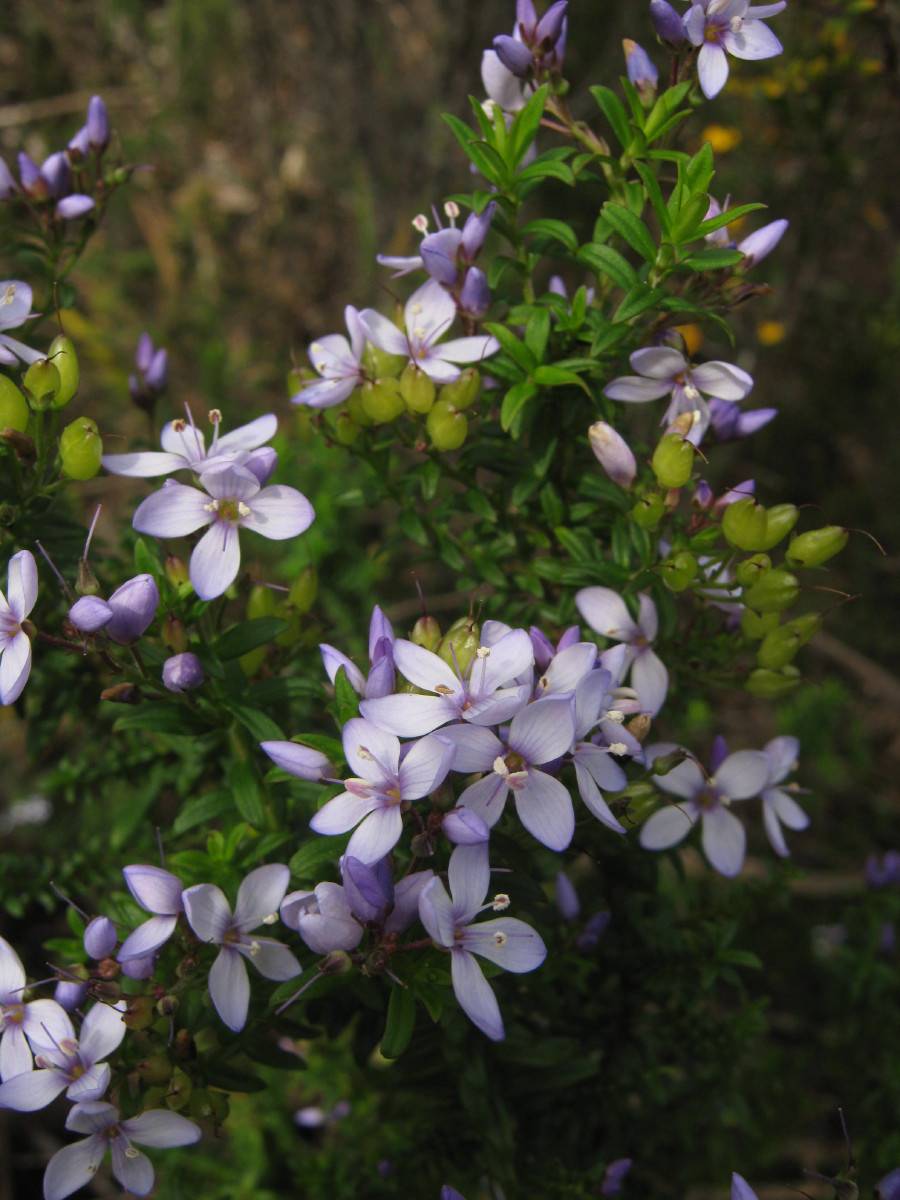
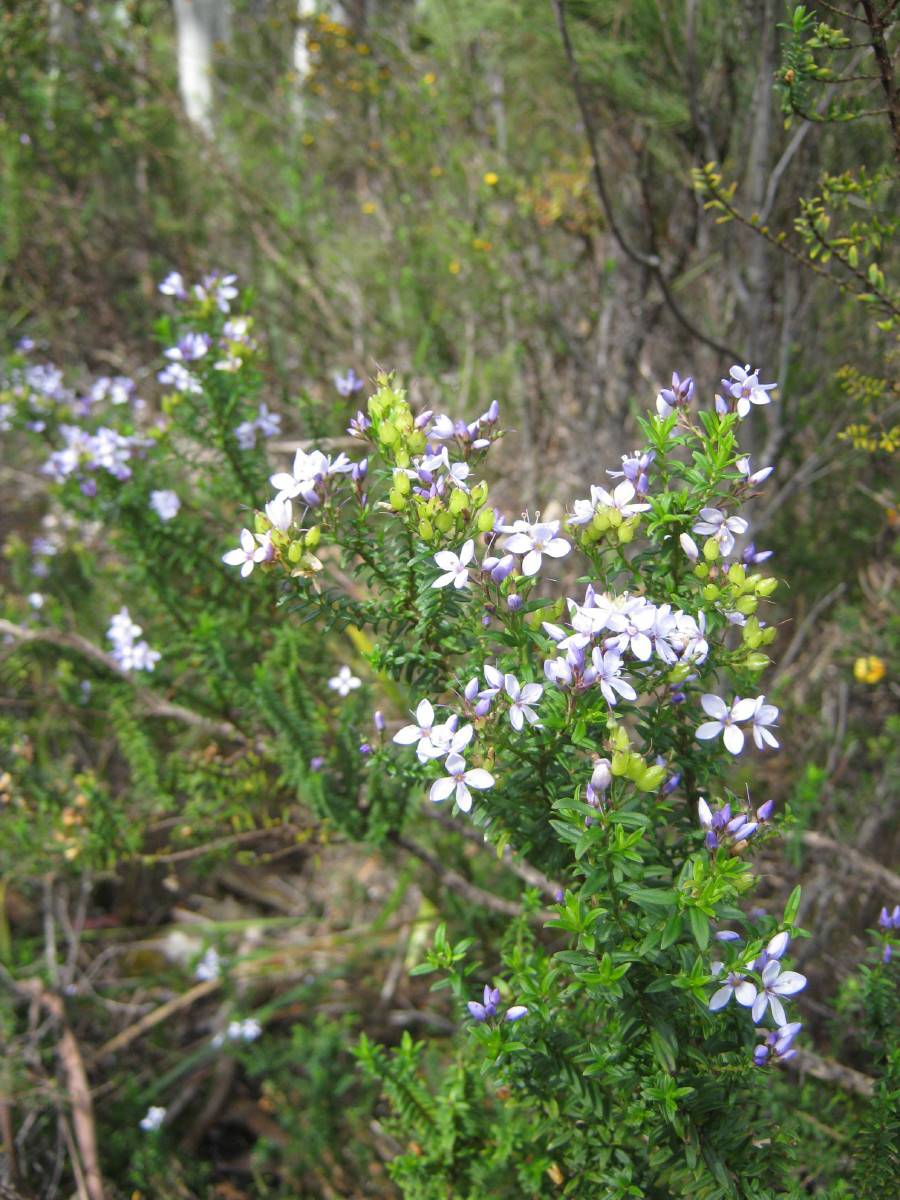
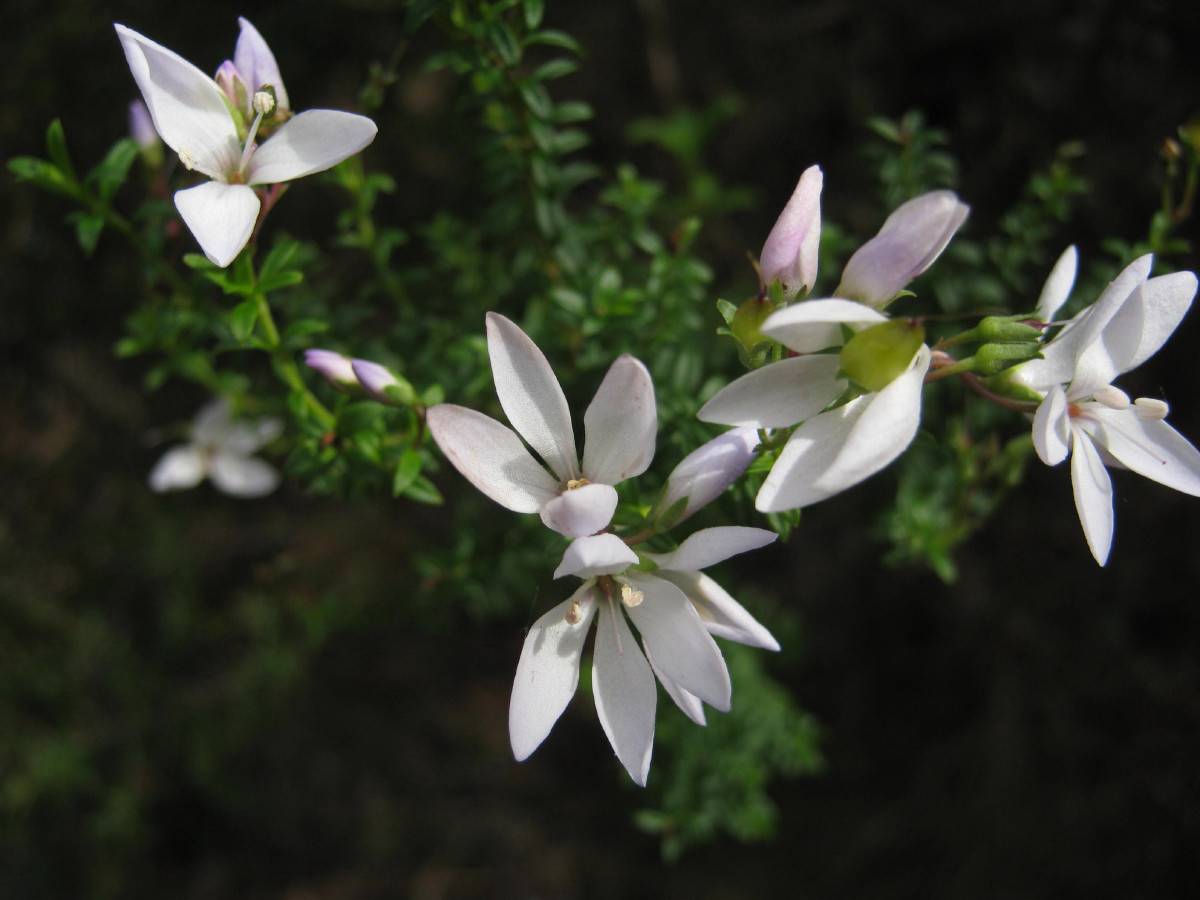
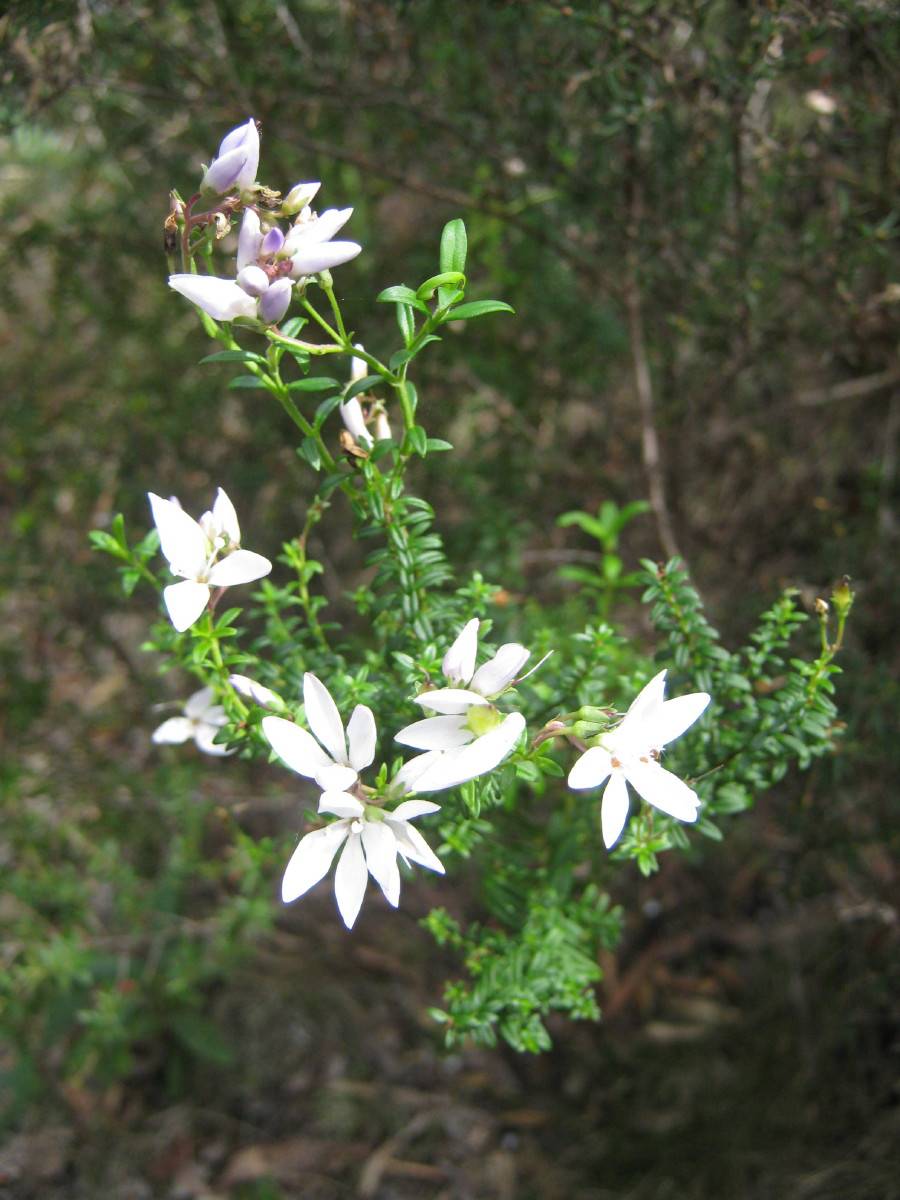
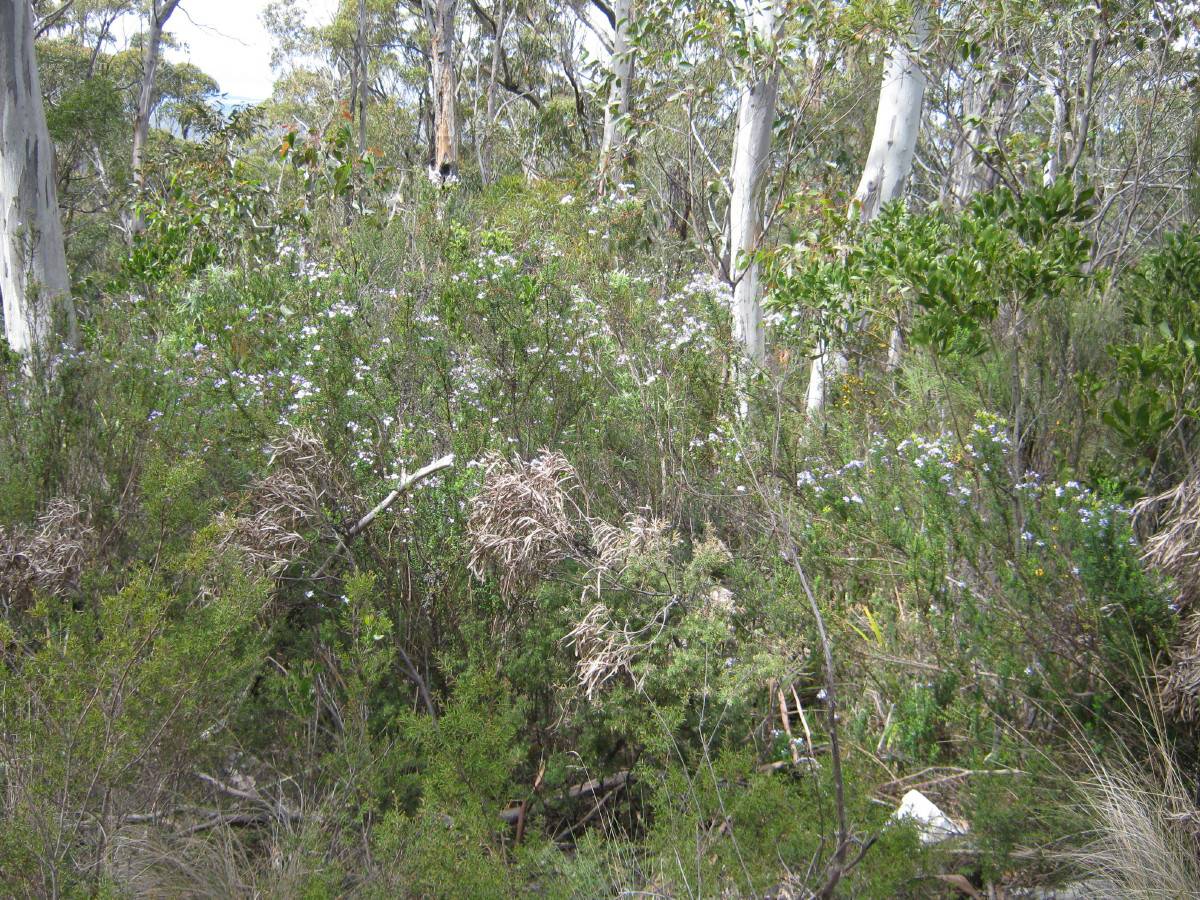
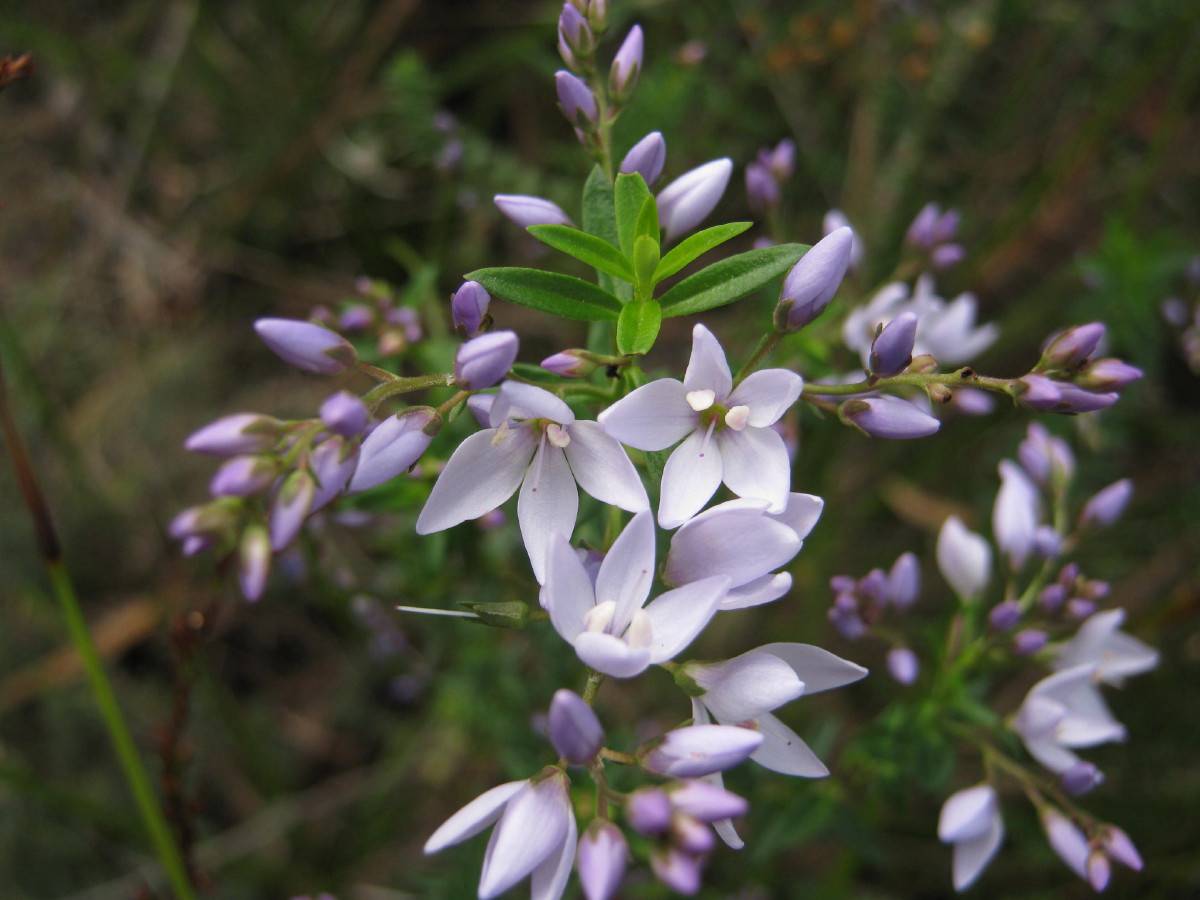
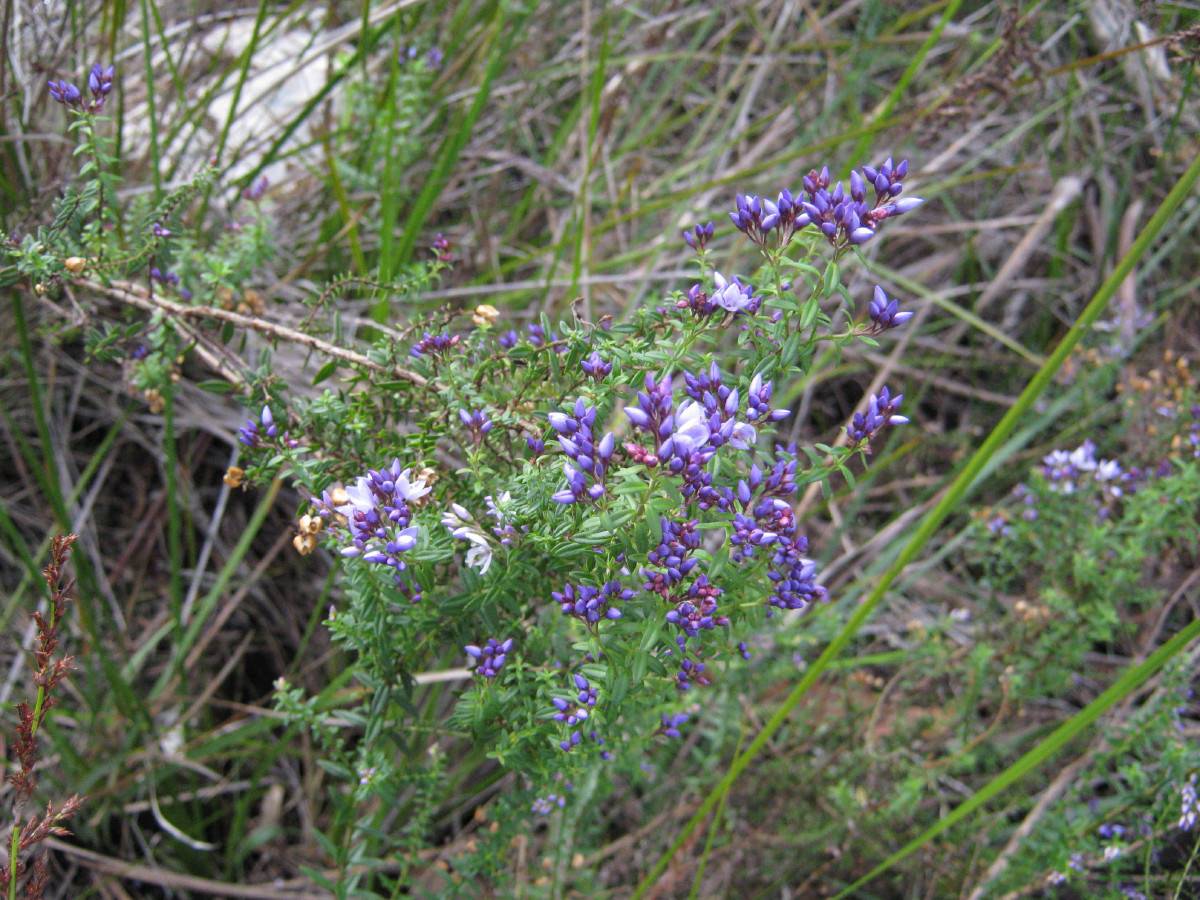
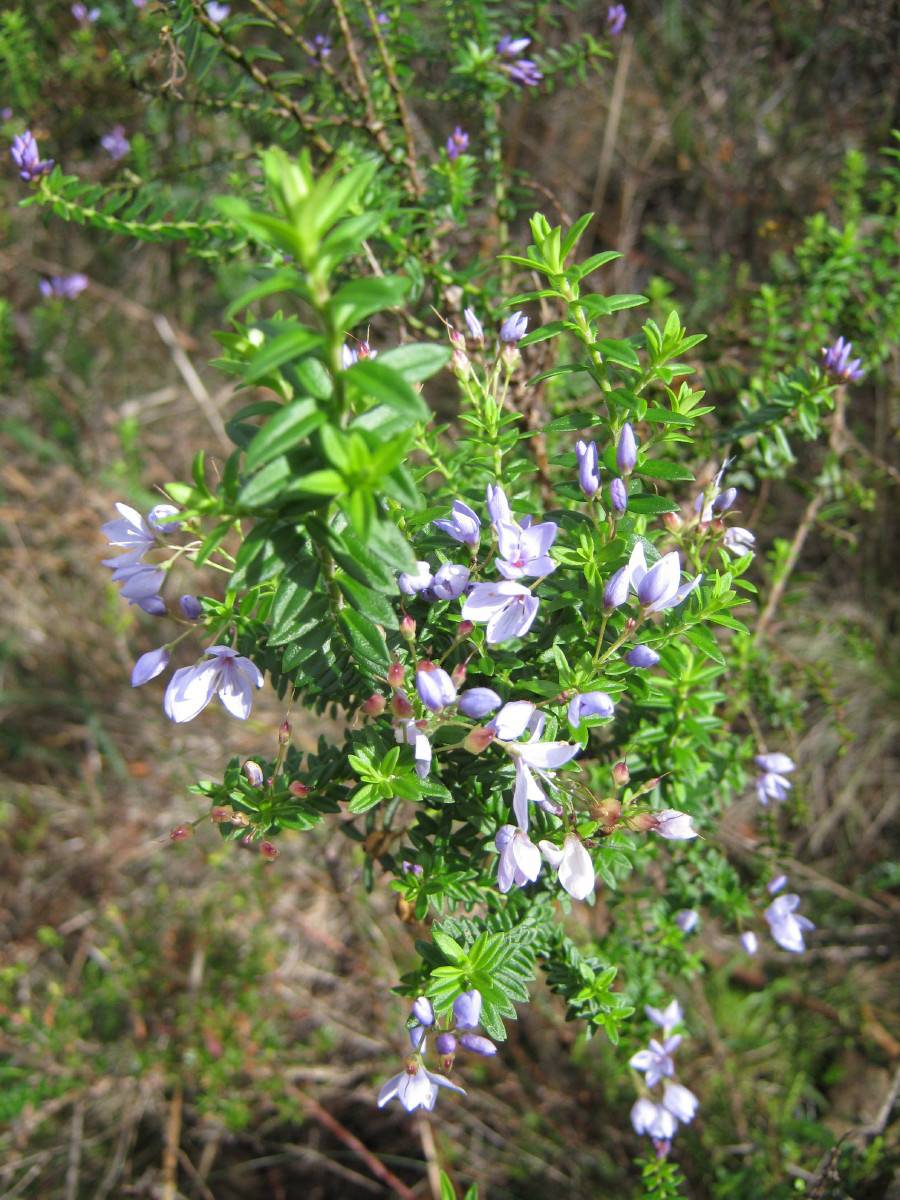
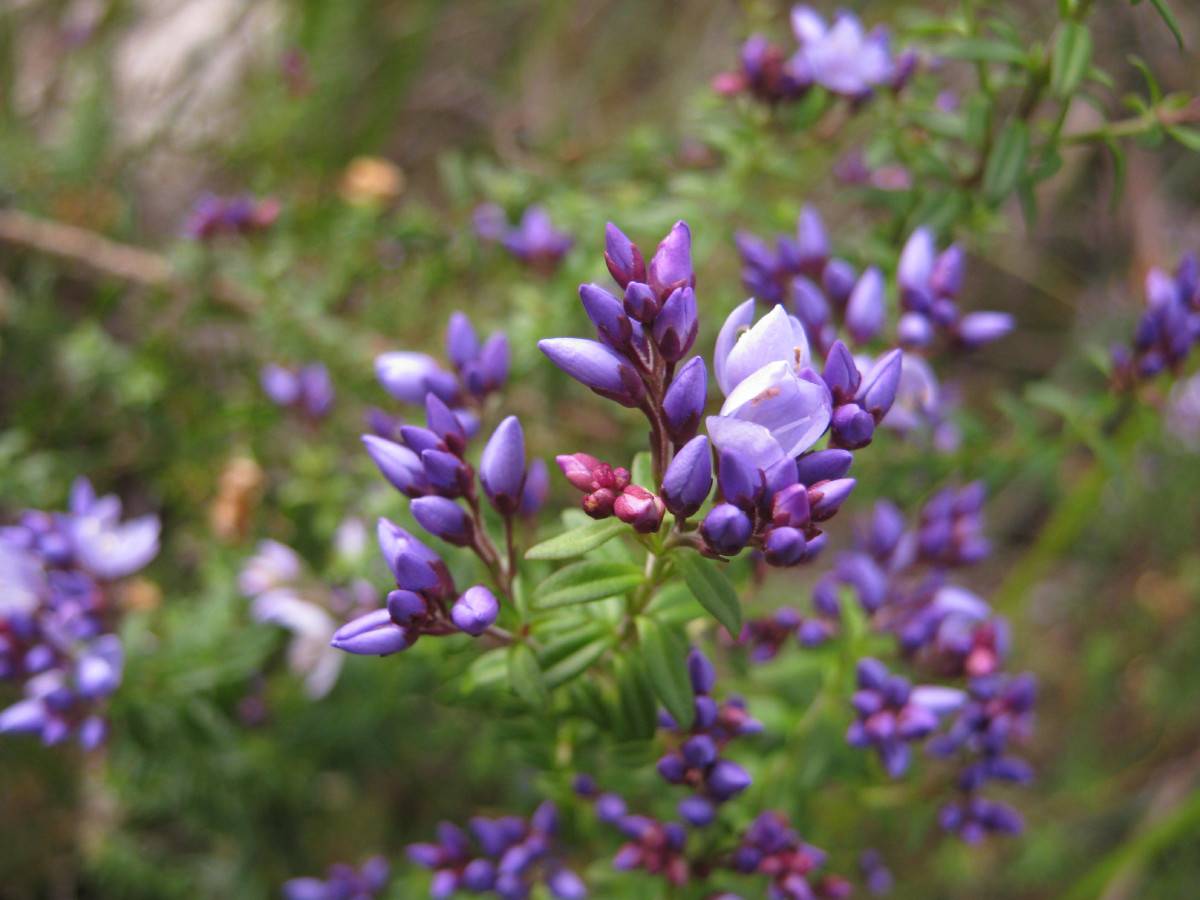
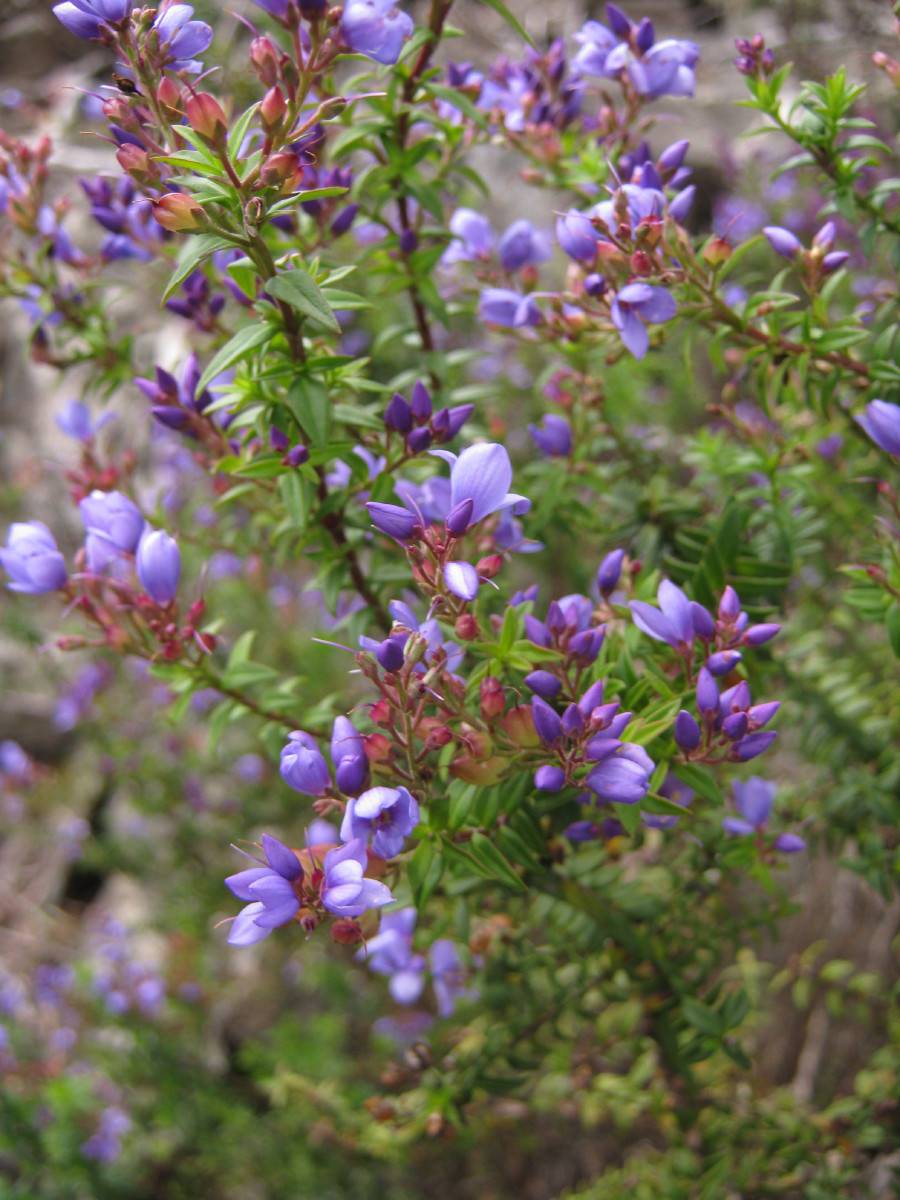
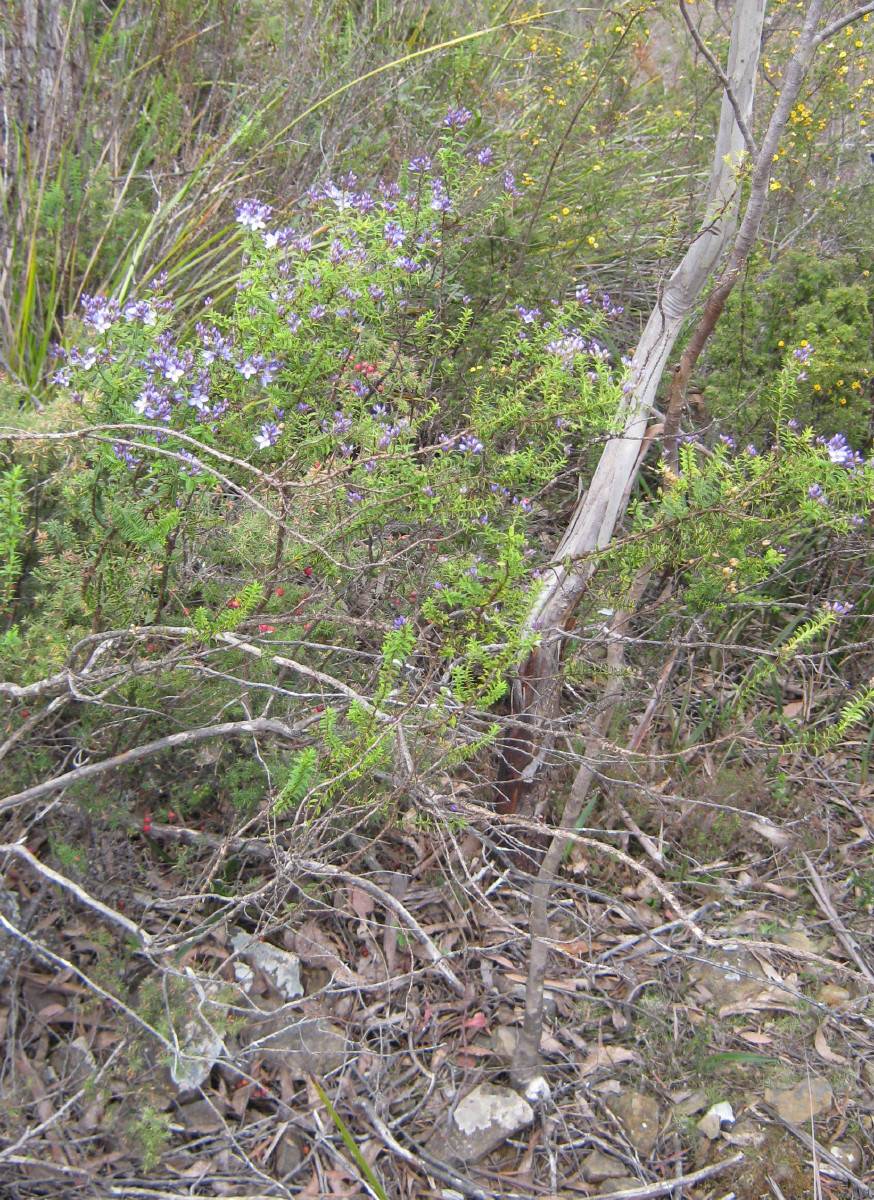
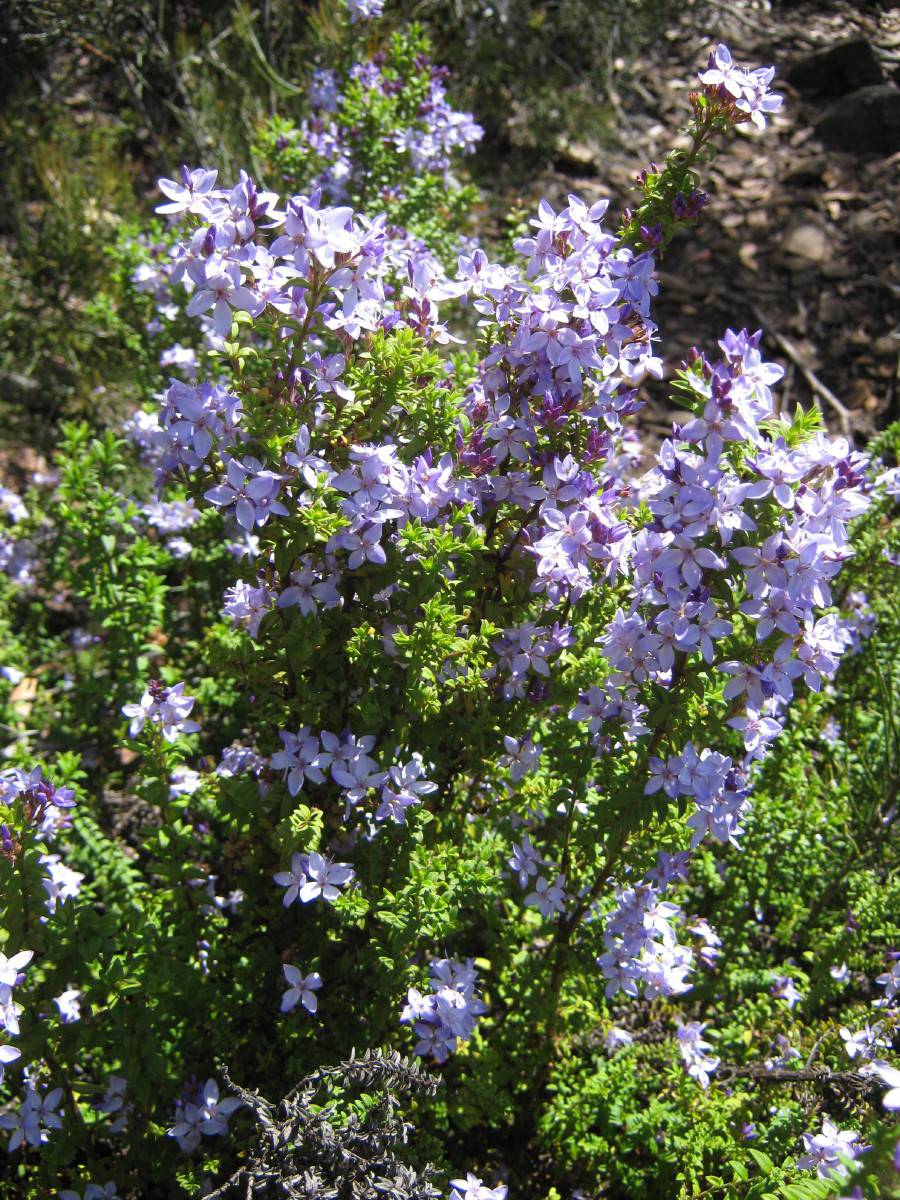
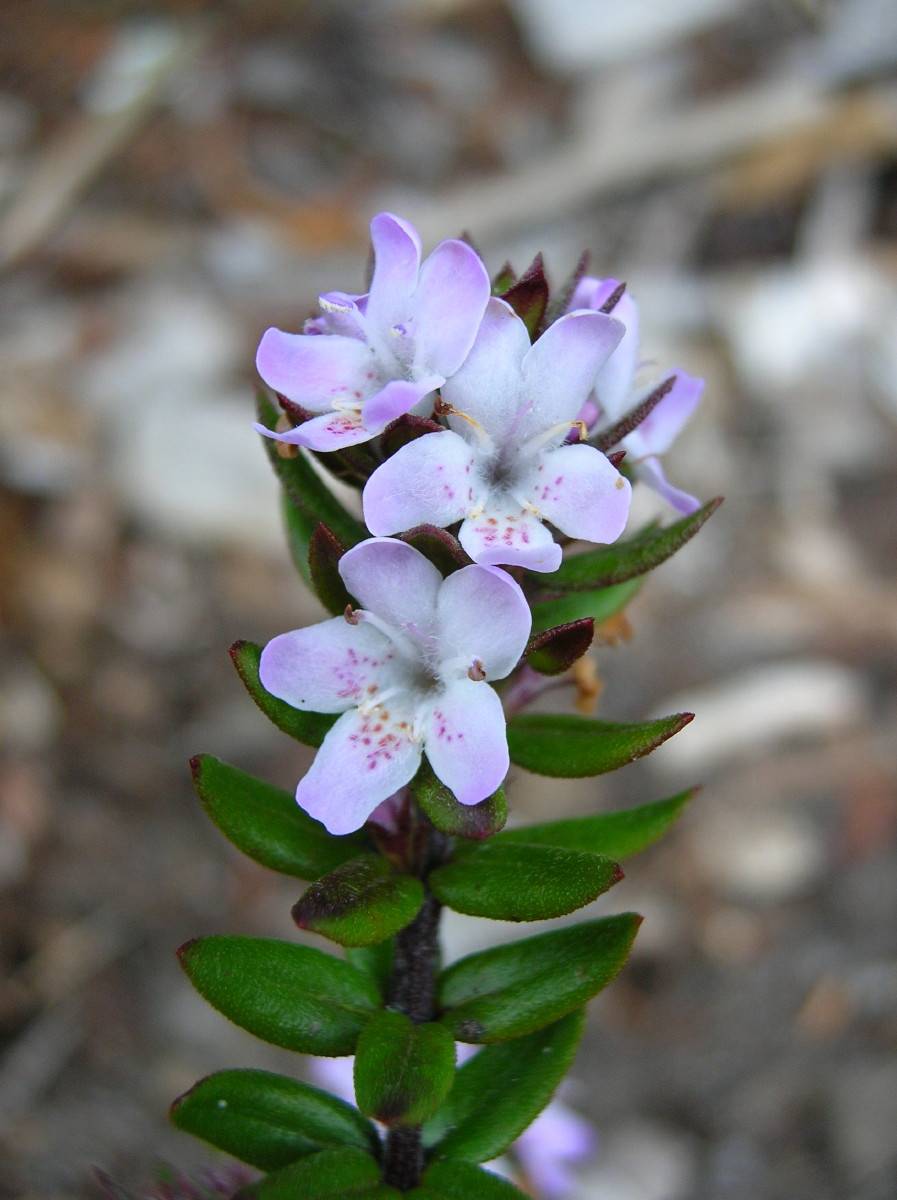
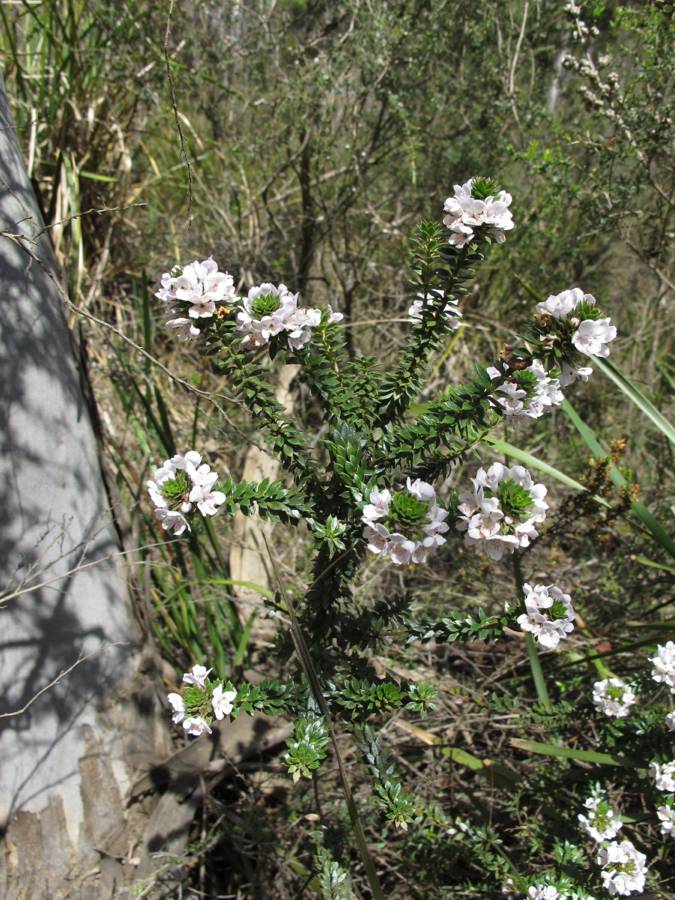
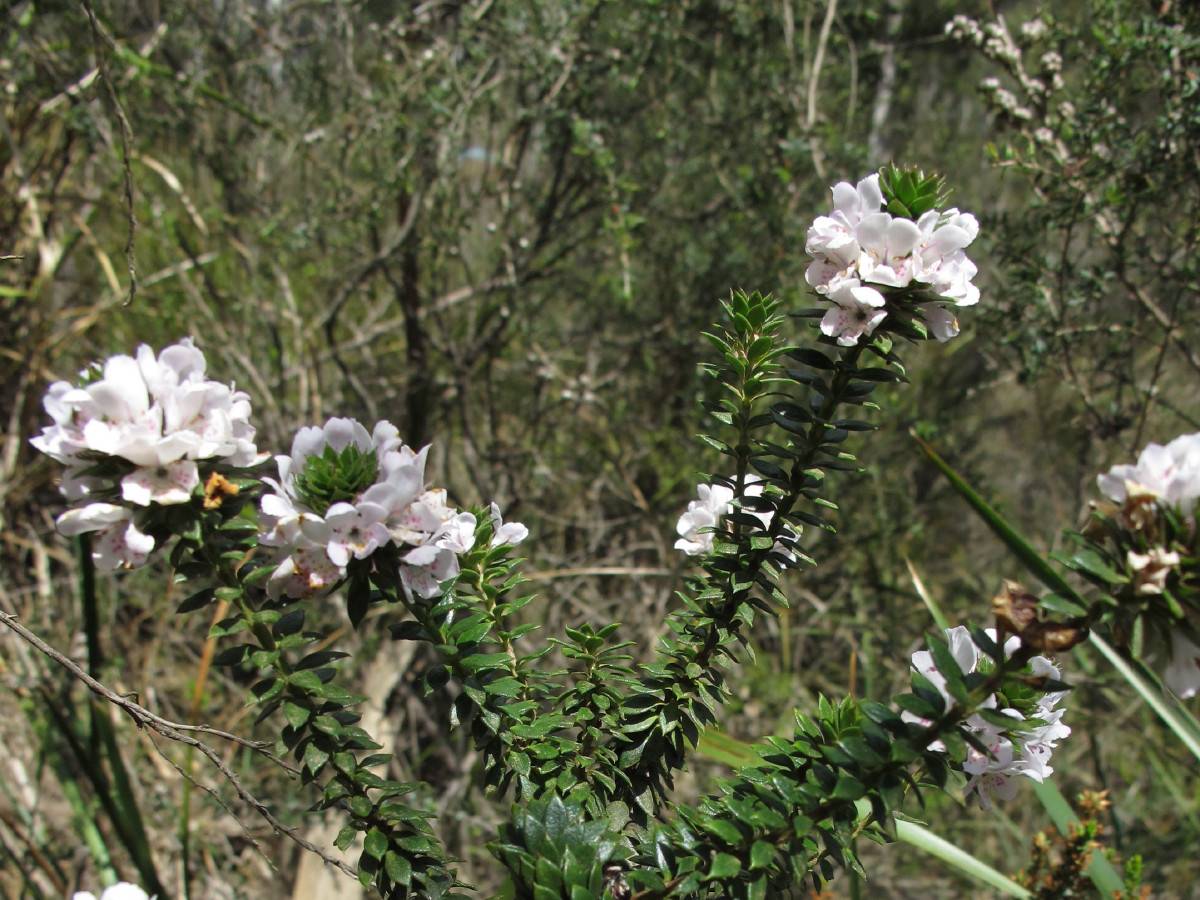
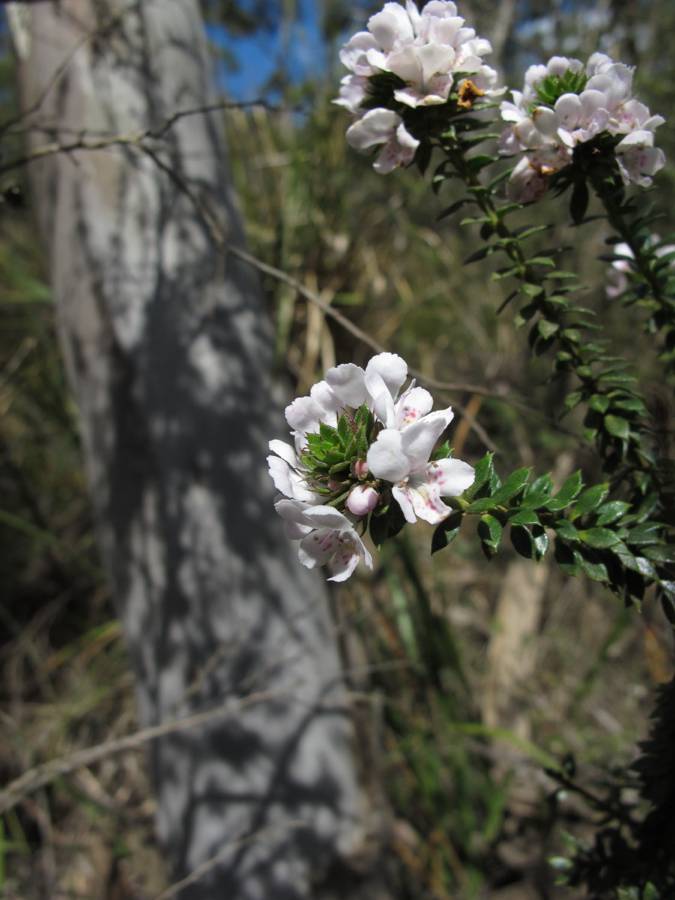
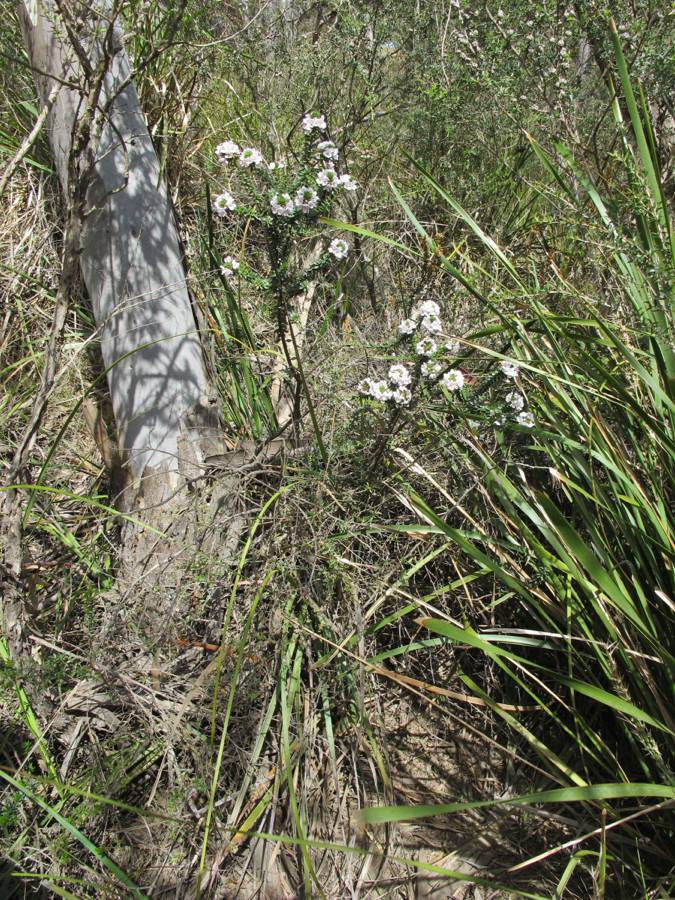
Veronica formosa
Botanical Name: Veronica formosa (E)
Commonly Called: Common speedwell bush
Botanical Family: Scrophulariaceae
Grows: 1-2m H x 1-2m W
Foliage: 5-15mm long, green, narrow lanceolate, crowded, opposite and decusate (alternate leaf pairs at right angles)
Flora: Purple to blue flowers with 4 petals and 2 prominent stamens in clusters toward the end of the stems.
Flowering Season: Spring
Fruiting body: A capsule with 2 lobes which is retained on the bush for a long time after the seed has been shed.
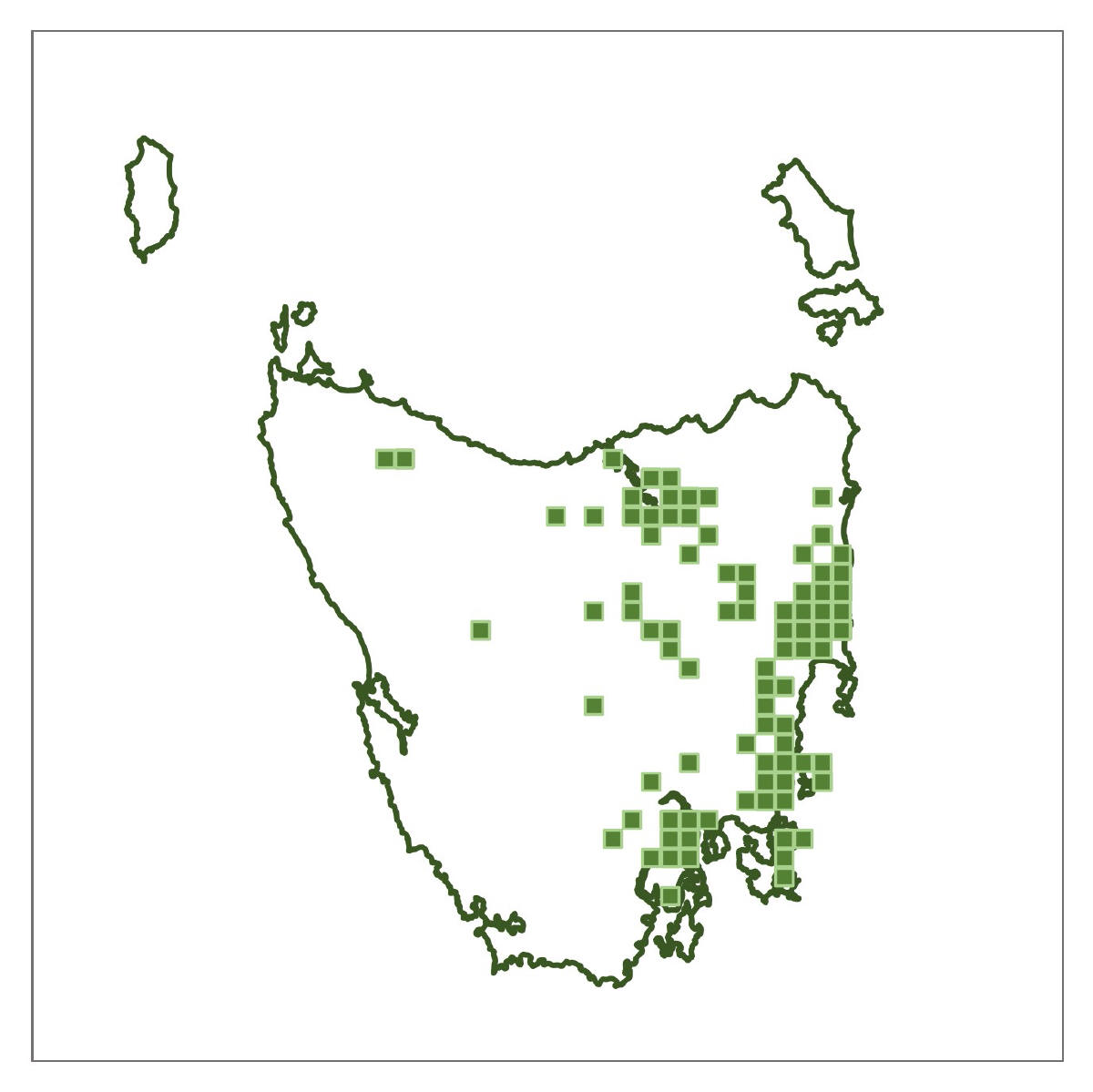
How and where it grows: Widespread on rocky hillsides from sea level to 1,000m, in the wetter areas of the east and south-east.
Where found: Wellington Park, Platform Peak and Mt Dromedary, Chimney Pot Hill Ridgeway
Other notes: The square arrangement of the leaves on the stems is a distinguishing feature. This species prefers a moist, very well drained soil in part/full sun and is best grown from seed to discover the many beautiful shades of blue to purple
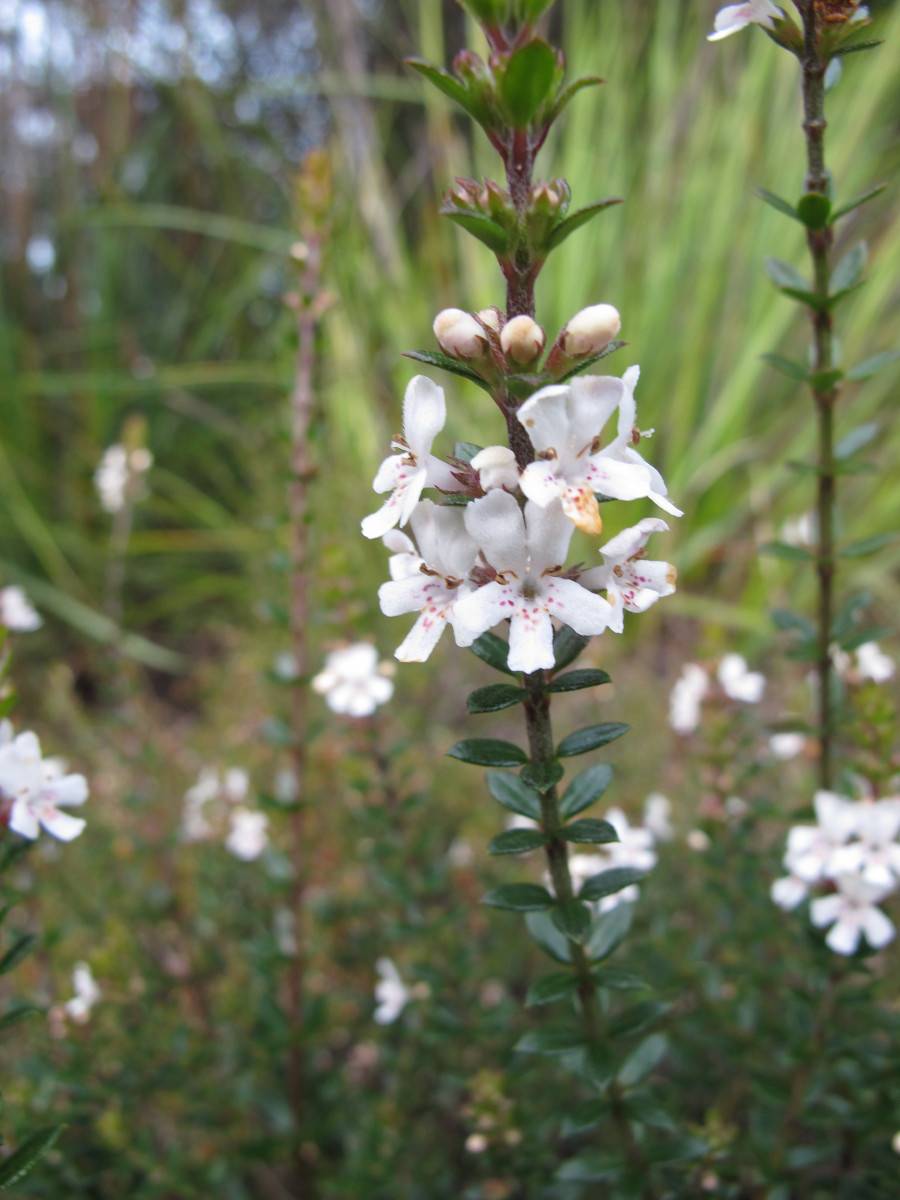
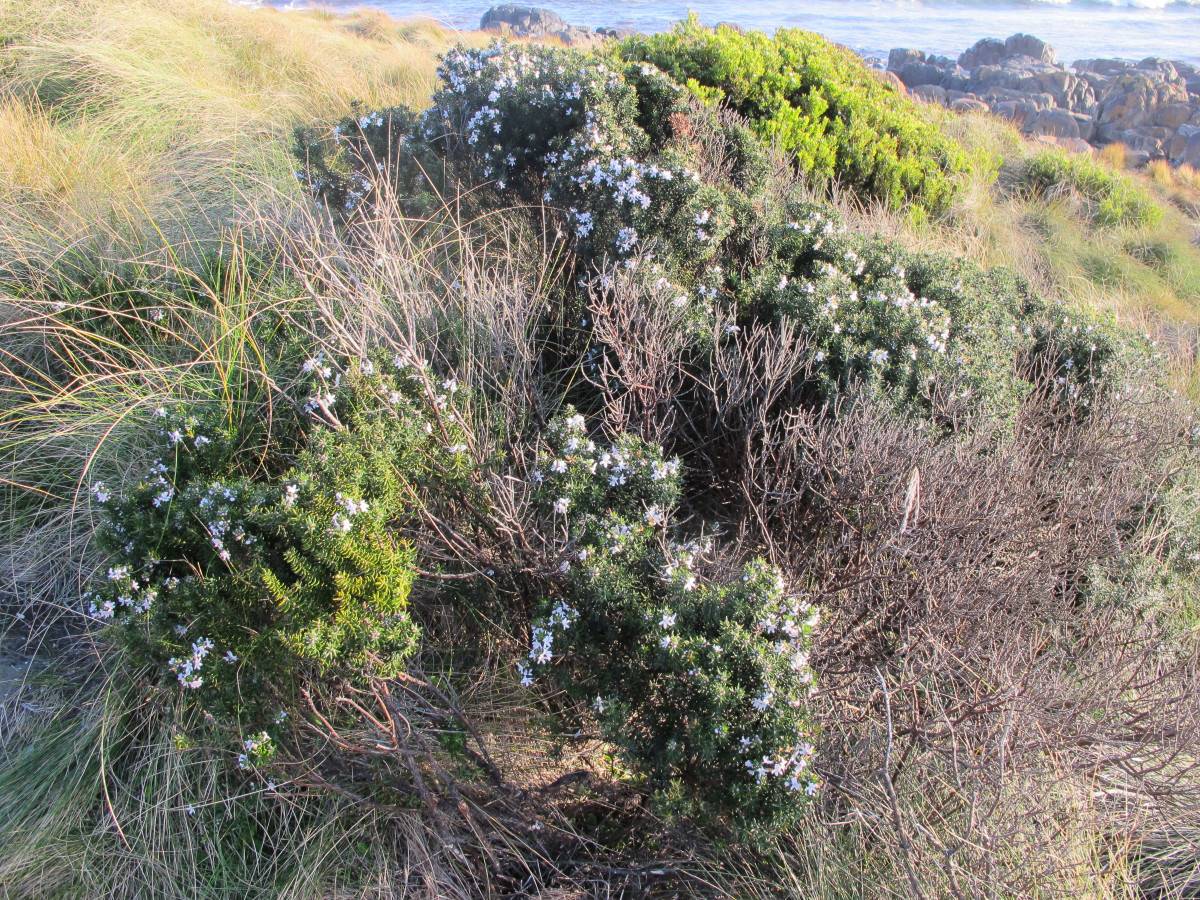
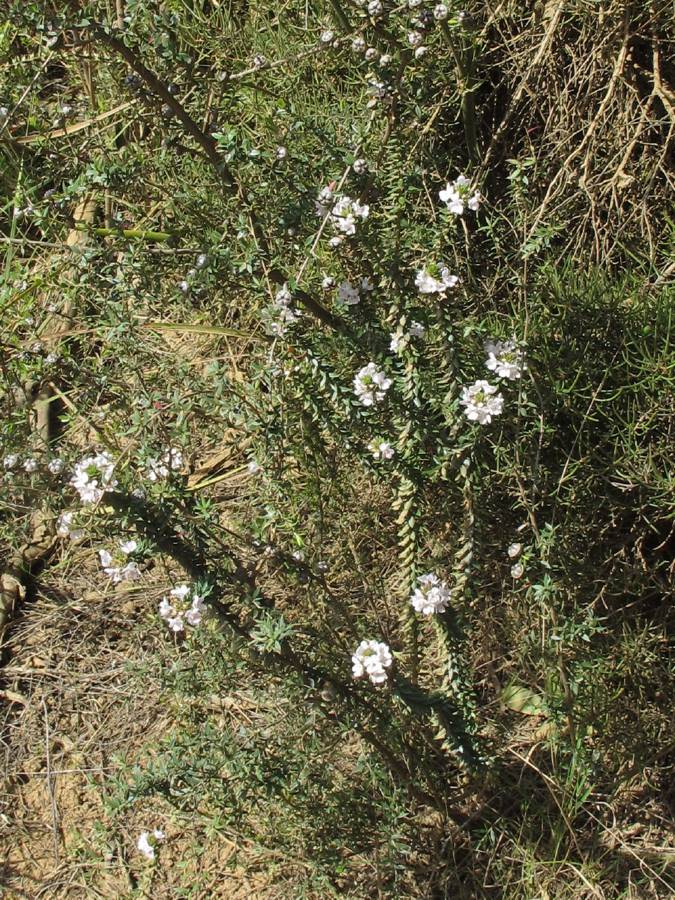
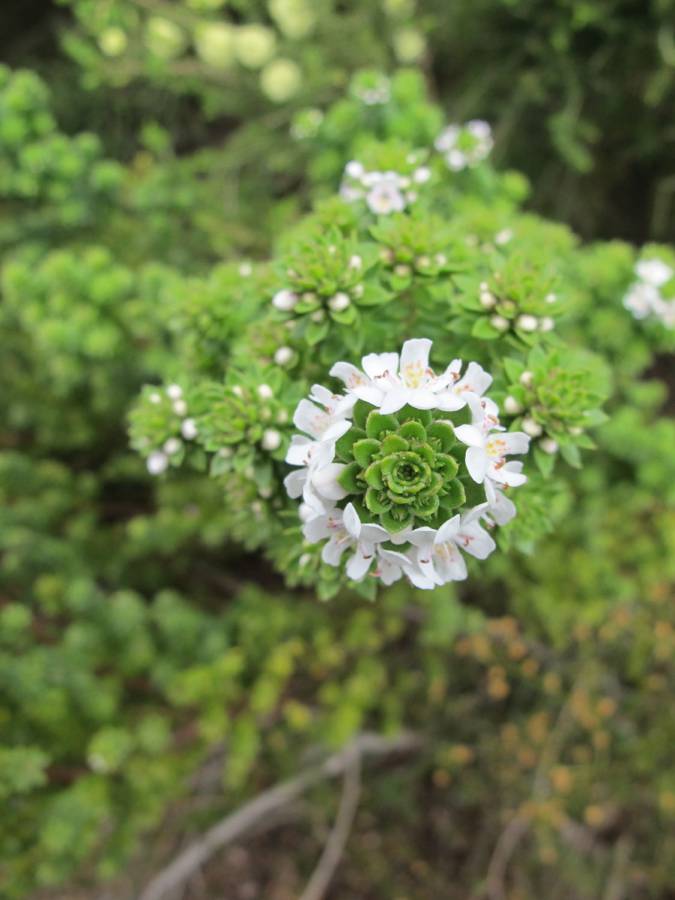
Westringia angustifolia
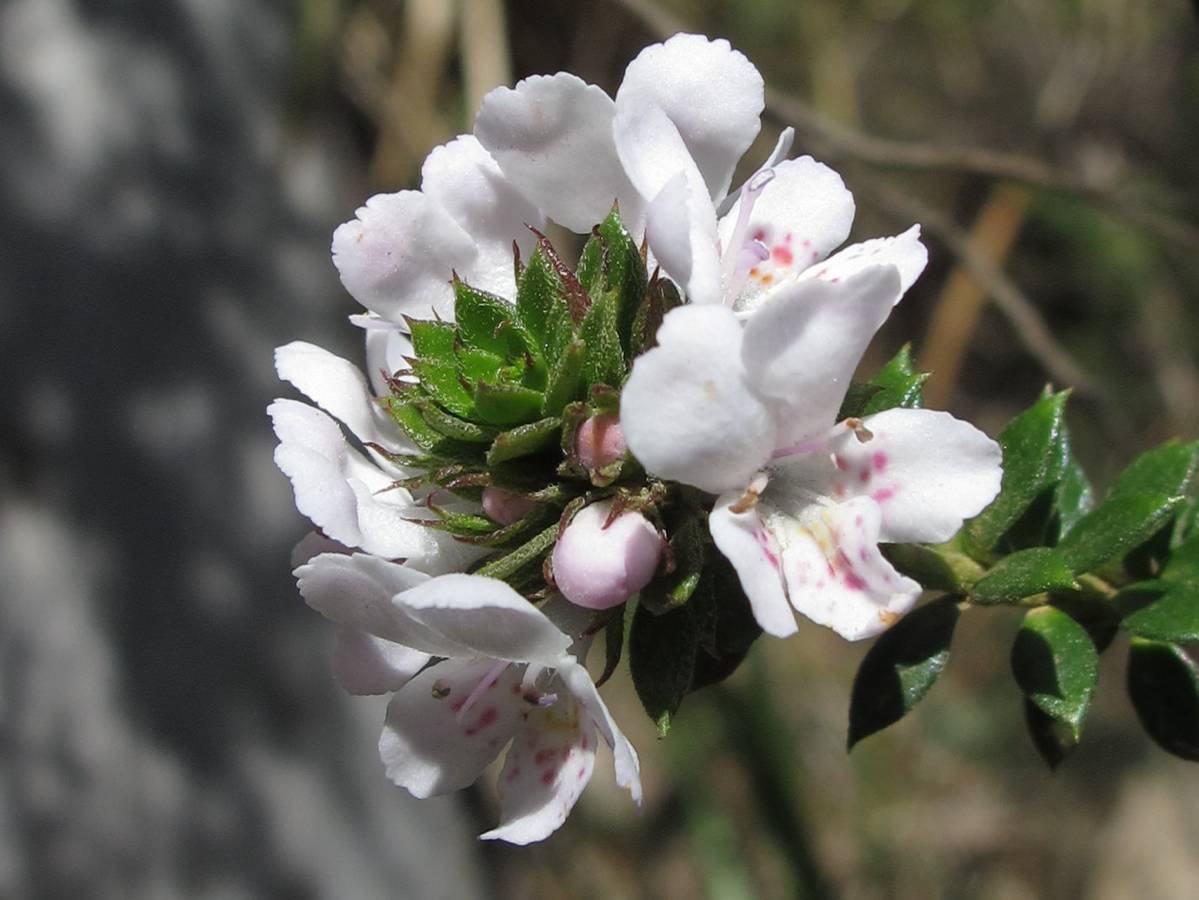
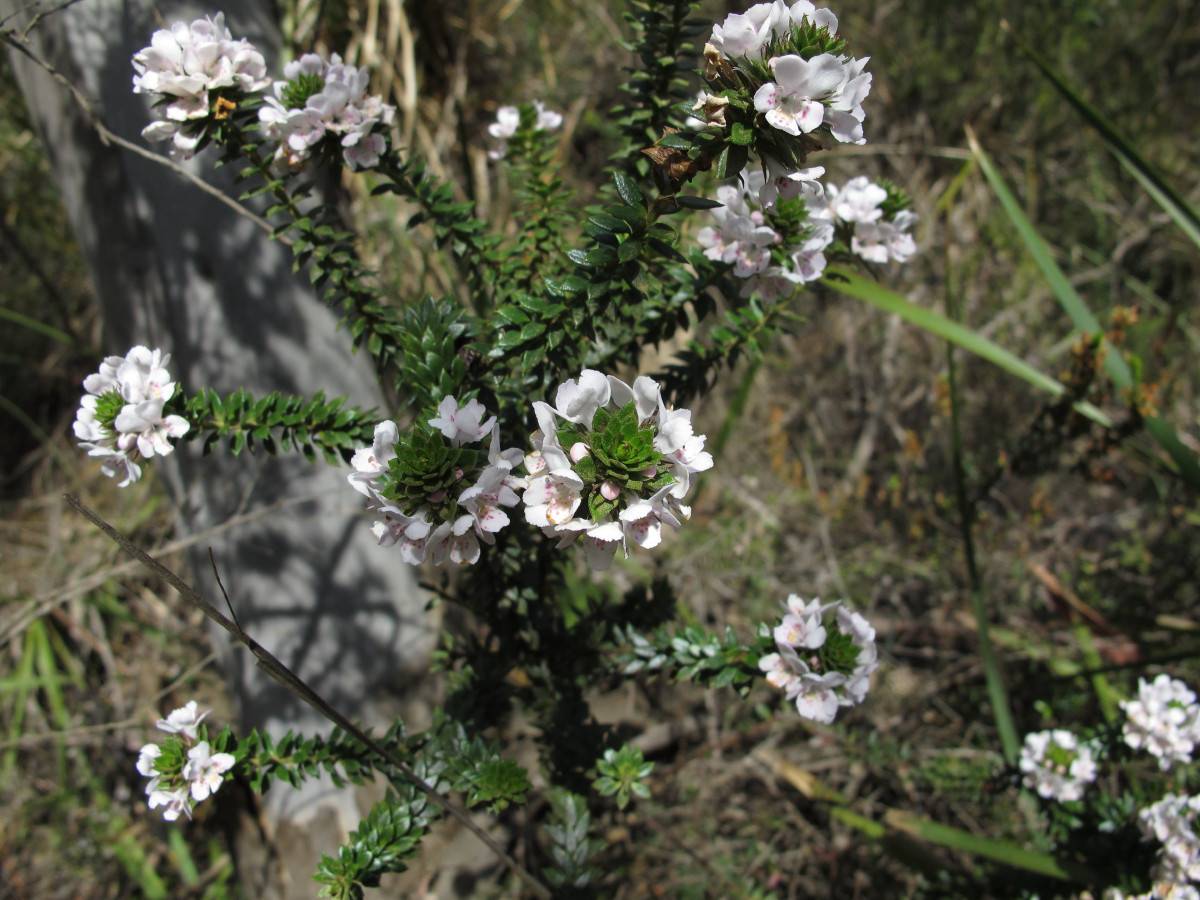
Botanical Name: Westringia angustifolia (E)
Commonly Called: Narrowleaf westringia
Botanical Family: Lamiaeae
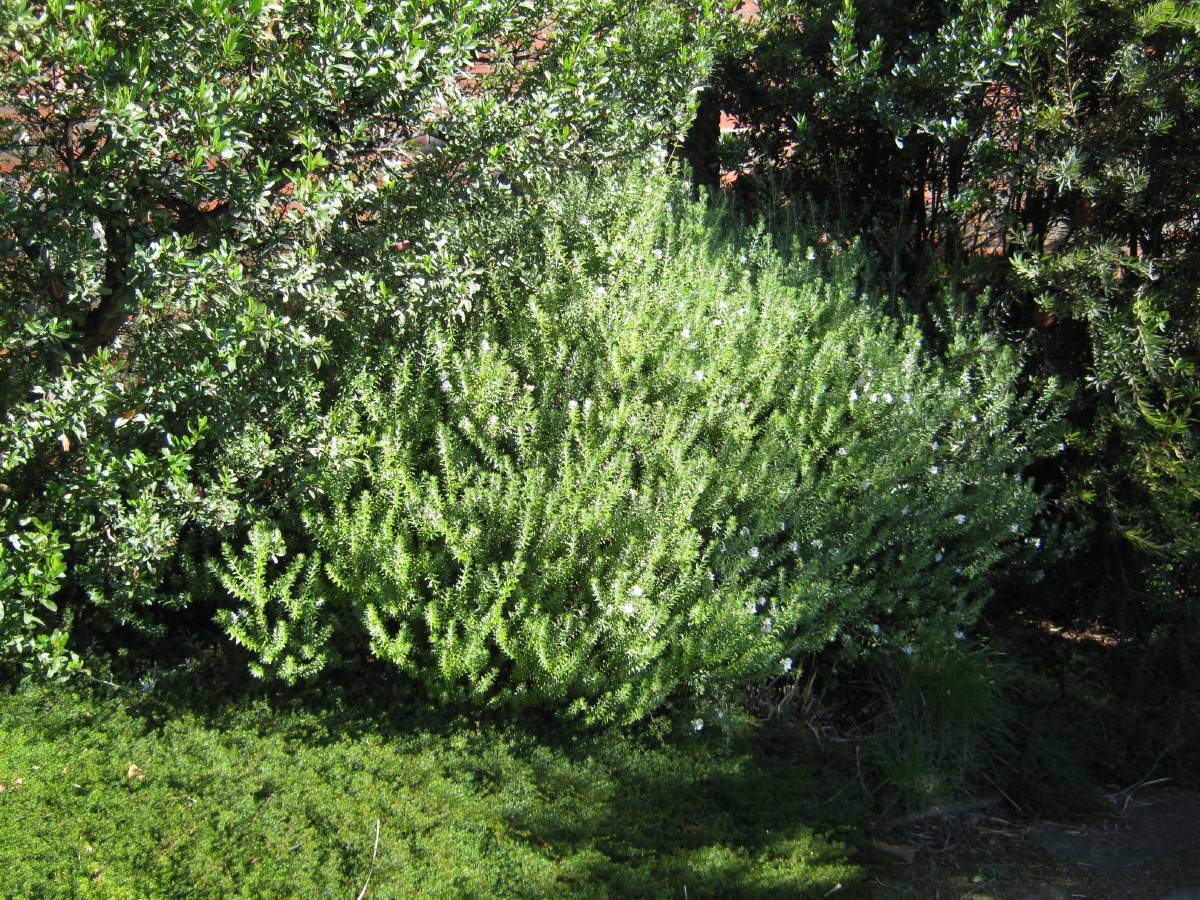
Grows: This compact, small, woody shrub grows from 1 to 3m high by 1.5 to 2m wide.
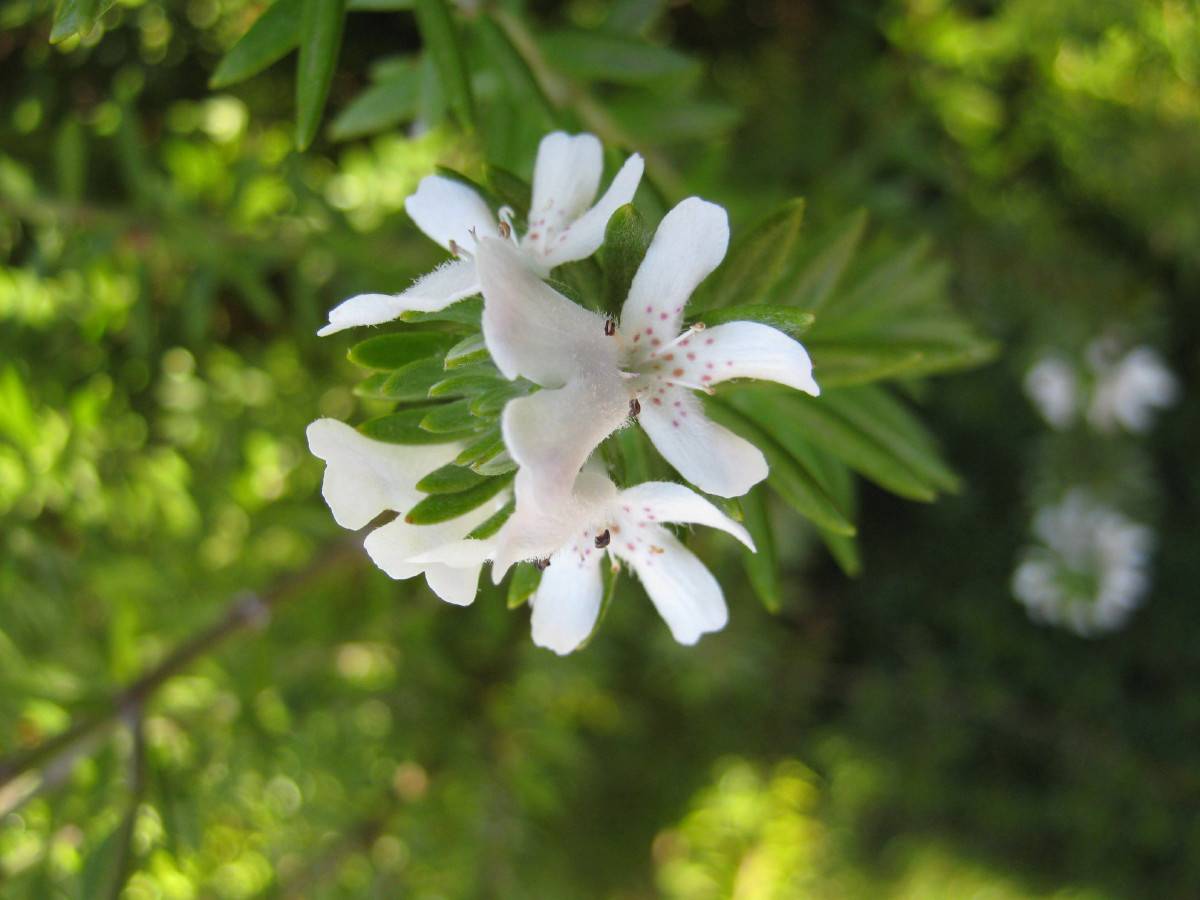
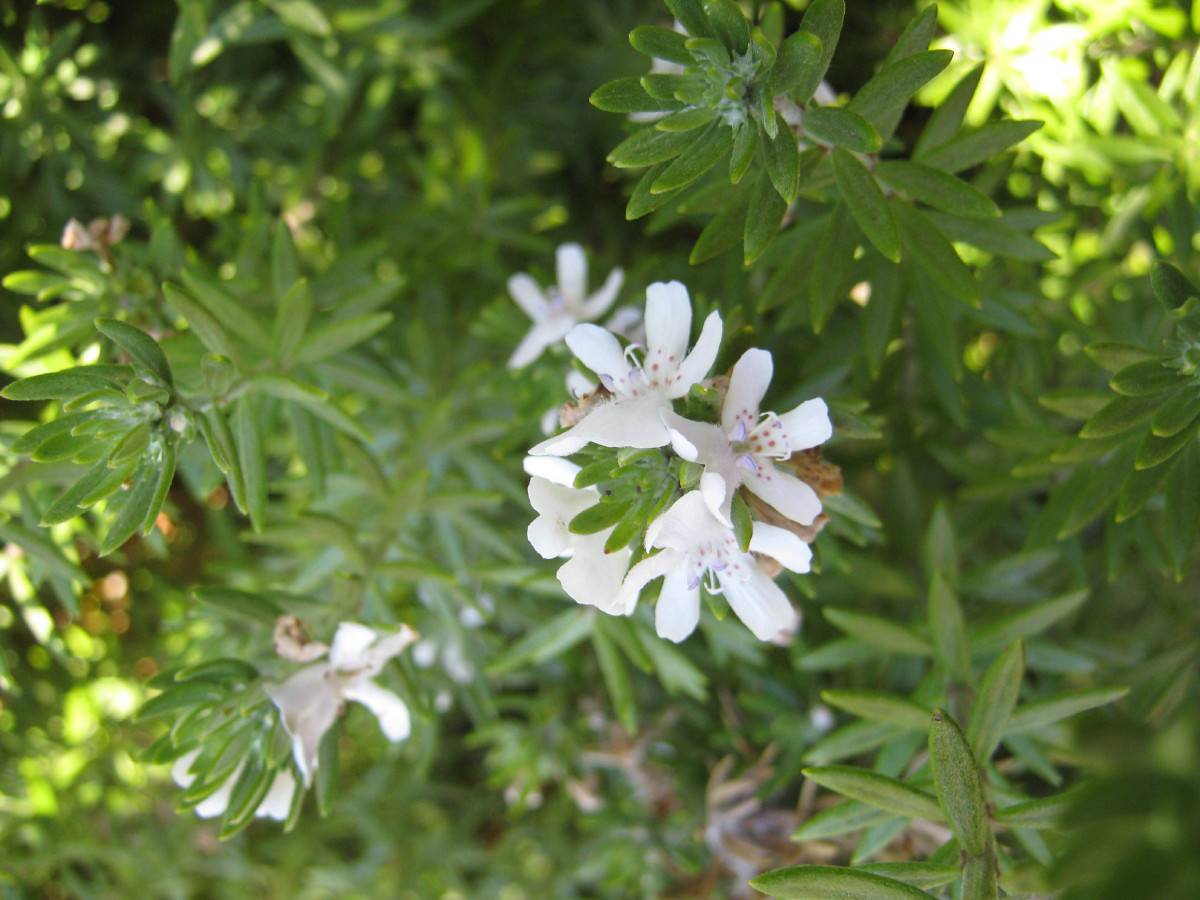
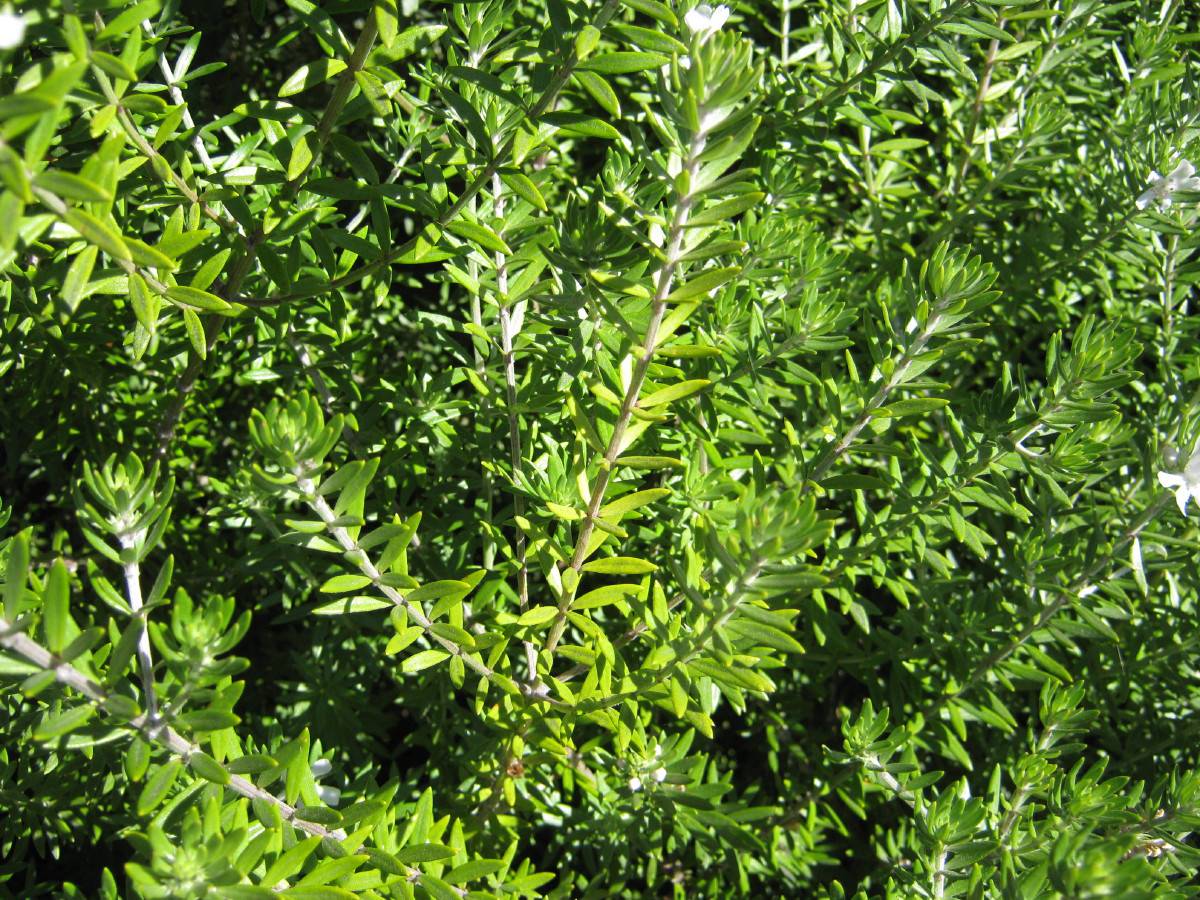
Foliage: The narrow, pointed leaves are usually in whorls of 3, dark green and straight, with rolled under edges and the under surface brown and hairy.
Flora: The showy flowers grow singly in the leaf axils near the ends of the branchlets and are very hairy, white to pale lilac with red/brown spots on the 3 lower petals and yellowish marking in the lower throat. The anthers appear to be blue when pollen covered and red or white when the pollen has dispersed, while the stigma look like arrow tips on the ends of the styles and the ovary is deep within the throat tube.
Flowering Season: Flowers appear late in winter and produce a mass display in spring.
Fruiting body: The fruit are four nutlets which don’t split open when mature to release their single seed.
How and where it grows: This is a rare plant, found mostly in dry shrubby understorey from 300-900m.
Where found: The Pipeline Track in and north from the Huon Road, Neika; Snug Tiers near Pelverata Falls; At Pelverata Falls viewing platform; Herring Back Track.
Other notes: This species may be differentiated from other Tasmanian Westringias by its 5 very short calyx lobes and the leaves in whorls of 3 around the stems. Pruning after the flowers have diminished will help to retain its shape. It grows well in moist, well-drained soil in part/full sun, and is best propagated from semi-hardwood cuttings.
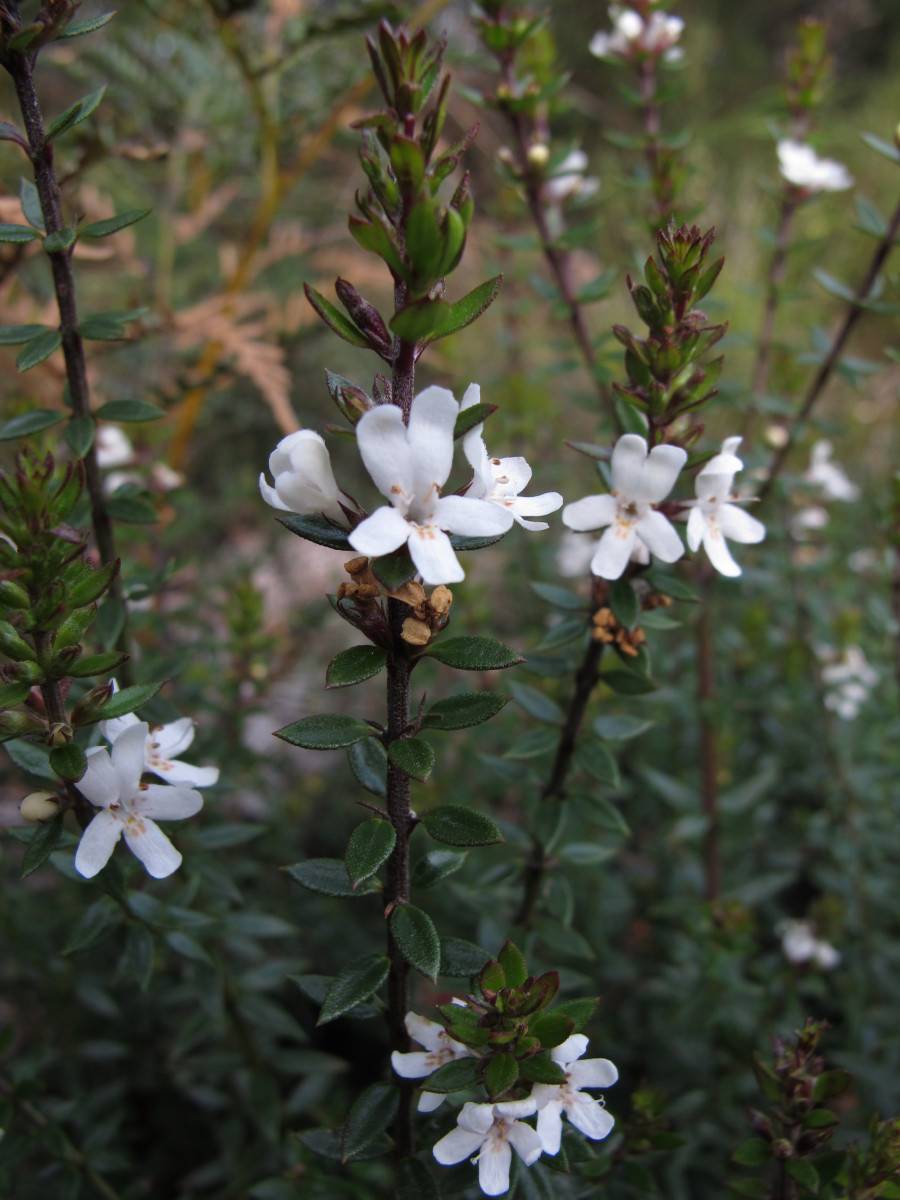
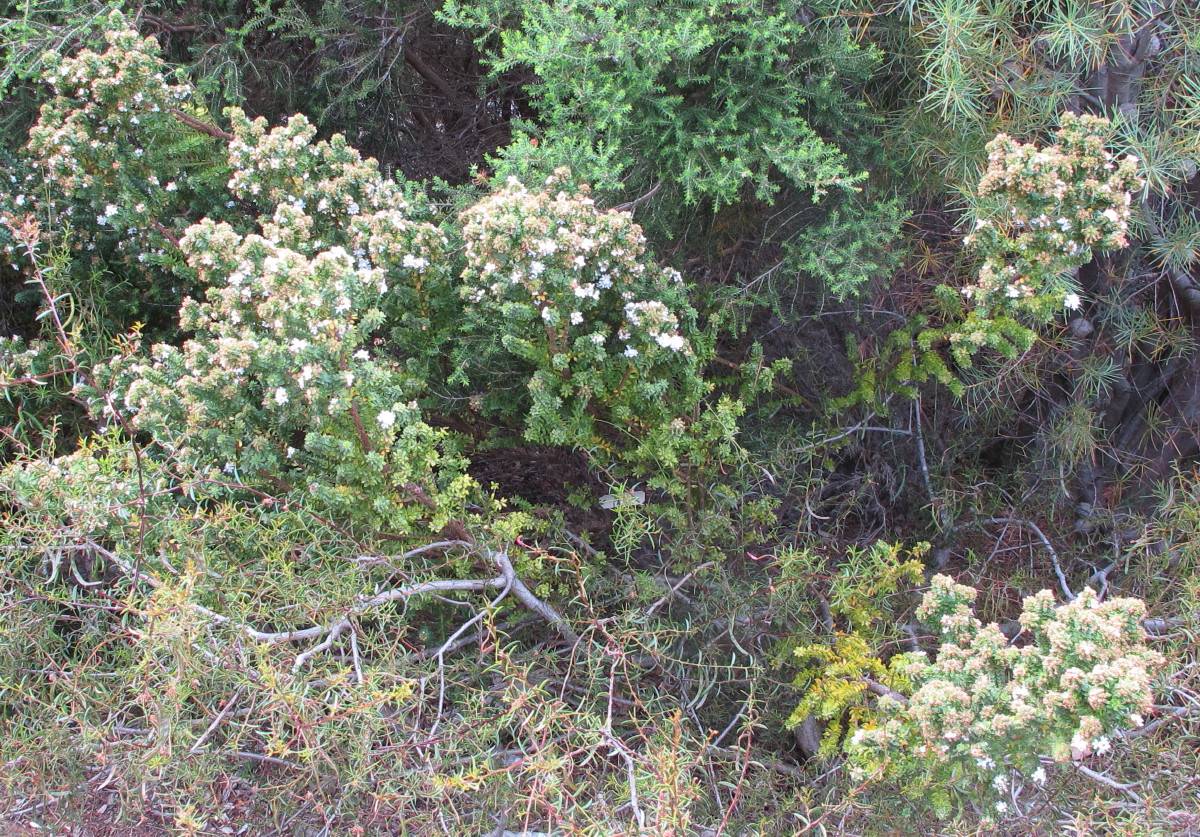
Westringia brevifolia
Botanical Name: Westringia brevifolia (E)
Commonly Called: Shortleaf westringia
Botanical Family: Lamiaceae
Grows: 0.5-1m H x 0.5-0.75m W
Foliage: Many branched shrub with square stems, narrow eliptical leaves in whorls of four, upper side glossy with a prominent vein, lower side white and hairy, edges rolled under.
Flora: Flowers single in the leaf axils crowded at the end of the stems, white/pale lilac with slightly hairy narrow lobes, lower ones red/brown and mauve dotted
Flowering Season: Spring
Fruiting Body: The fruit are four nutlets.
How and where it grows: Moderately common in dry locations in the wetter part of the State, often near the coast; also, occasional in the south-east, east, and Furneaux Group.
Where found: South Port Bluff; Stowport bluff; Longley; North Sister, Summit Ben Lomond; Wayatinah, Central Highlands; Rocky Cape NP; Union Bridge and Mersey River near Mole Creek, Meander Valley; Cape Sorrell Lighthouse, West Coast
Other notes: This species can be distinguished by its five narrow, triangular calyx lobes which taper to a fine point and its leaves which are nearly always in whorls of four.
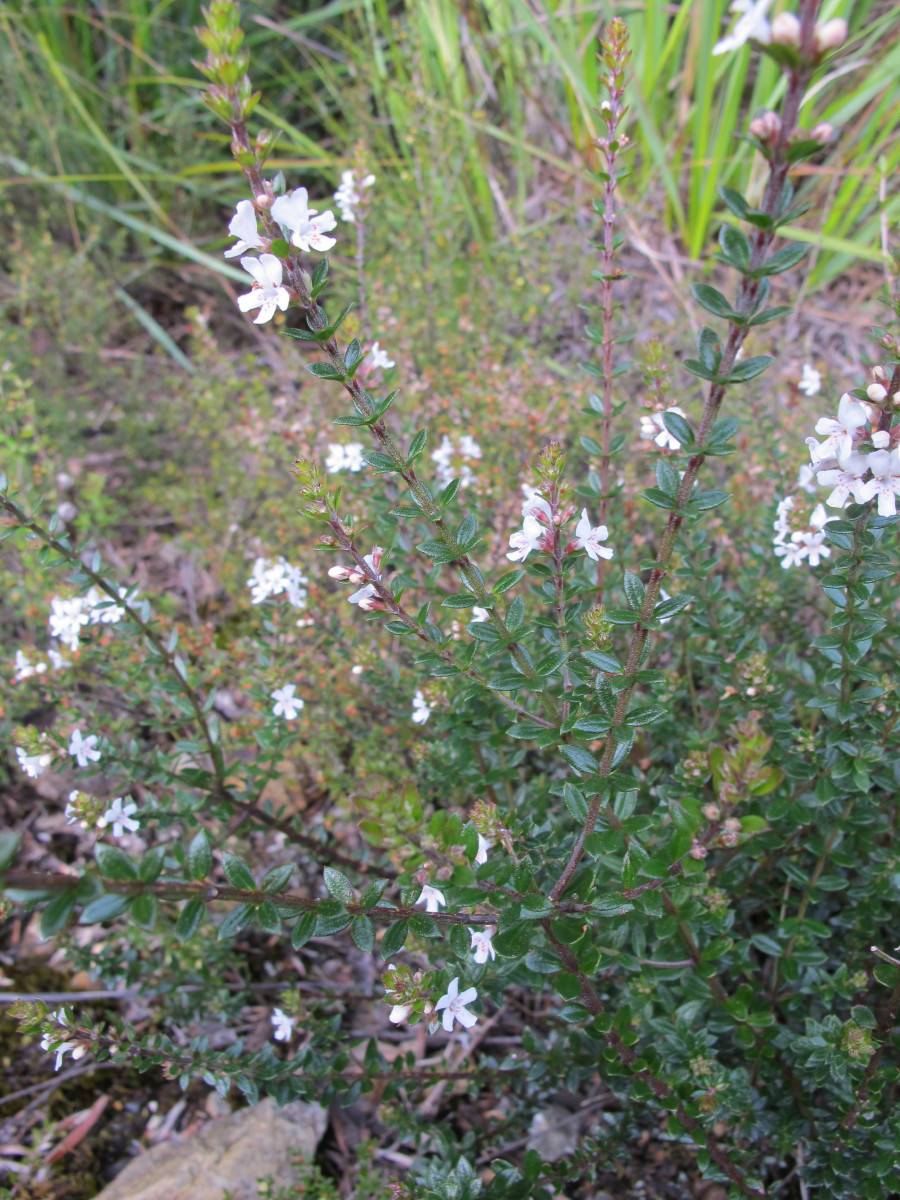
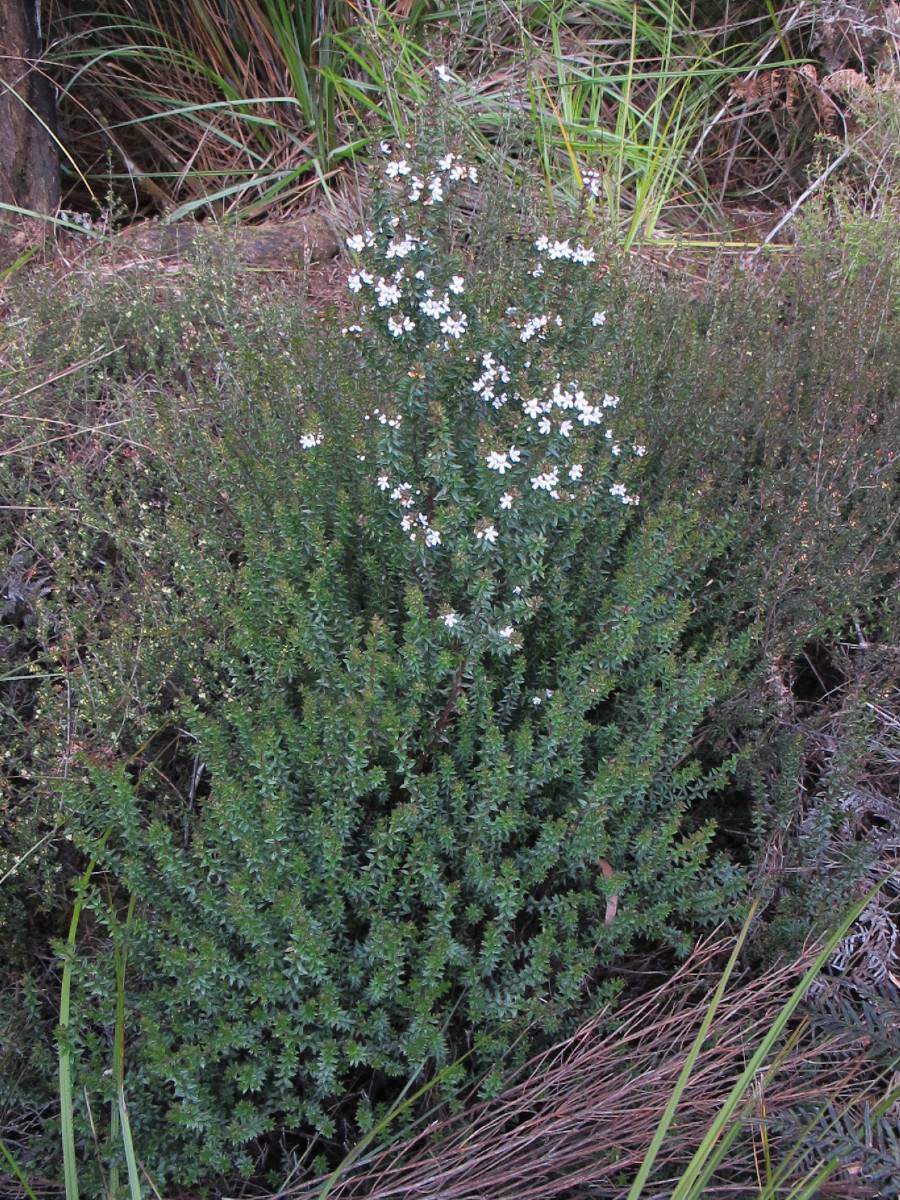
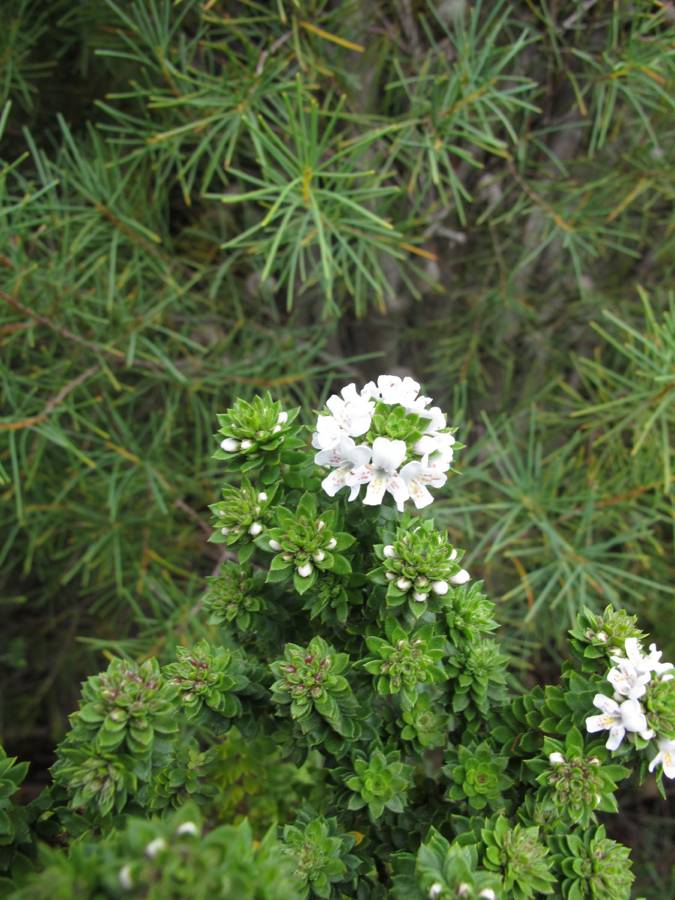
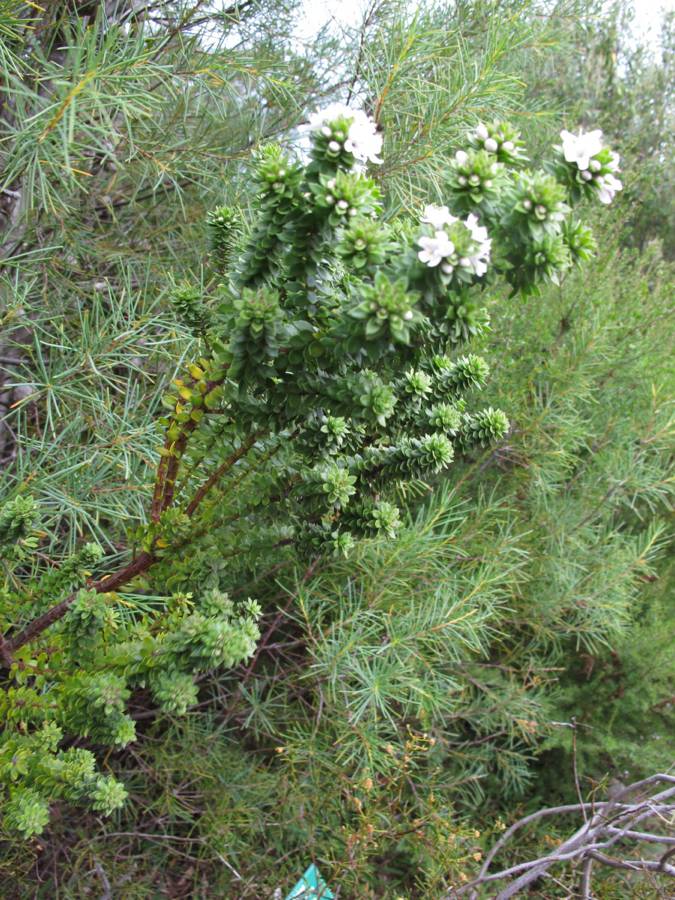
Westringia rubiifolia
Botanical Name: Westringia rubiifolia (E)
Commonly Called: Sticky westringia
Botanical Family: Lamiaceae
Grows: 0.5-1m H x 0.5-0.75m W
Foliage: Square reddish stems with oval shaped stalkless leaves, 5-10mm long by 3-5mm wide, upper side shiny dark green, lower side pale green, normally arranged in whorls of four.
Flora: Flowers small, tubular, opening to five hairy lobes, two on the upper lip and three on the lower lip with orange spots. Single, clustered near the tips of the stems in the leaf axils, often in whorls. Calix lobes narrow and triangular, as long as the tube.
Flowering Season: Spring/summer
Fruiting body: Fruit are 4 nutlets
How and where it grows: Moderately common in wet sclerophyll forests from sea level to mountains in north and west
Where found: Ansons Bay Road, Doctors Peak Forest Reserve, east coast; Pieman Road, Meredith Range Regional Reserve, West Coast; Snow Hill Forest Reserve, Northern Midlands; Mt Barrow Reserve; Thompsons Marsh, Douglas Apsley NP; Snug Tiers, near Margate; Bellettes Creek, Tasman Peninsular
Other notes: This species requires moist well-drained soil and grows best in part shade. It is best propagated from firm cuttings. The hairless bottom surface of the leaves and very slightly rolled leaf edges, leaves in whorls of four, calyx as described and flowers in whorls are distinguishing features.

- Acacia axillaris Sp E
- Acacia dealbata Sp
- Acacia derwentiana Sp E
- Acacia genistifolia Sp
- Acacia gunnii Sp
- Acacia leprosa Sp
- Acacia melanoxylon Sp
- Acacia mucronata subsp. dependens Sp E
- Acacia mucronata subsp. longifolia Sp
- Acacia mucronata subsp. mucronata Sp E
- Acacia verticillata Sp
- Acrothamnus hookeri Sp
- Ajuga australis Sp
- Almaleea subumbellata Sp
- Alyxia buxifolia Sp
- Amperea xiphoclada Sp
- Anodopetalum biglandulosum Sp E
- Anopterus glandulosus Sp E
- Aotus ericoides Sp
- Aristotelia peduncularis Sp E
- Arthropodium strictum Sp
- Athrotaxis cupressoides Sp E
- Athrotaxis selaginoides Sp E
- Atriplex cinerea Sp
- Bauera rubioides Sp
- Bedfordia salicina Sp E
- Billardiera longiflora Sp E
- Blandfordia punicea Sp E
- Boronia citriodora Sp E
- Boronia gunnii E Sp
- Boronia pilosa Sp
- Bossiaea cinerea Sp
- Bossiaea riparia Sp
- Brachyscome spathulata Sp
- Bulbine glauca Sp
- Calytrix tetragona Sp
- Carpobrotus rossii Sp
- Chamaescilla corymbosa Sp
- Chrysocephalum apiculatum Sp
- Clematis aristata Sp
- Comesperma volubile Sp
- Coprosma quadrifida Sp
- Cyathodes glauca Sp E
- Daviesia latifolia Sp
- Daviesia sejugata Sp
- Diplarrena moraea Sp
- Dodonea filiformis Sp E
- Epacris acuminata Sp E
- Epacris impressa Sp
- Epacris virgata Sp E
- Eucalyptus risdonii Sp E
- Eucalyptus delegatensis subsp. tasmaniensis Sp E
- Eucalyptus tenuiramis Sp E
- Eucalyptus vernicosa Sp E
- Euryomyrtus ramosissima Sp
- Exocarpos strictus Sp
- Goodenia elongata Sp
- Goodenia lanata Sp
- Goodenia ovata Sp
- Goodia lotifolia Sp
- hakea-epiglottis subsp. epiglottis Sp E
- Hakea lissosperma Sp
- Hardenbergia violacea Sp
- Hibbertia appressa Sp
- Hibbertia procumbens Sp
- Hibbertia riparia Sp
- Hibbertia sericea var sericea Sp
- Indigofera australis Sp
- Kennedia prostrata Sp
- Kunzea ambigua Sp
- Lasiopetalum micranthum Sp E
- Leptecophylla parvifolia Sp E
- Leptospermum nitidum Sp E
- Lissanthe strigosa Sp
- Melaleuca pustulata Sp E
- Melaleuca virens Sp E
- Milligania densiflora Sp E
- Odixia achlaena Sp E
- Olearia archeri Sp E
- Olearia phlogopappa Sp
- Orites acicularis Sp E
- Orites revolutus Sp E
- Oxylobium ellipticum Sp
- Ozothamnus scutellifolius Sp E
- Patersonia fragilis Sp
- Phebalium daviesii Sp E
- Philotheca virgata Sp
- Pimelea drupacea Sp
- Pimelea nivea Sp E
- Pimelea sericea Sp E
- Pomaderris pilifera subsp. talpicutica Sp E
- Richea pandanifolia Sp E
- Spyridium obovatum var. obovatum Sp E
- Spyridium obovatum var. velutinum Sp E
- Spyridium ulicinum Sp E
- Stackhousia monogyna Sp
- Stylidium graminifolium Sp
- Tetratheca gunnii Sp E
- Thelionema caespitosum Sp
- Trochocarpa thymifolia Sp E
- Veronica formosa E Sp
- Vittadinia muelleri Sp
- Westringia angustifolia Sp E
- Westringia brevifolia Sp E
- Westringia rubiifolia Sp E
- Zieria arborescens Sp
- Australian bugle Sp
- Beaked needlebush Sp E
- Blackwood Sp
- Blue lovecreeper Sp
- Blue stars Sp
- Bluish bulbine-lily Sp
- Blunt caterpillar wattle Sp E
- Broom spurge Sp
- Bushmans bootlace Sp E
- Button-leaf everlastingbush Sp E
- Central lemon boronia Sp E
- Cheeseberry Sp E
- Cherry riceflower Sp
- Chocolate lily Sp
- Christmas bells Sp E
- Claspleaf heath Sp E
- Common Everlasting Sp
- Common fringemyrtle Sp
- Common heath Sp
- Common speedwell bush Sp E
- Davies waxflower Sp E
- Derwent wattle Sp E
- Dusty daisybush Sp
- Erect caterpillar wattle Sp
- Erect guineaflower Sp
- Fineleaf hopbush Sp E
- Forest candles Sp
- Golden everlastingbush Sp E
- Golden pea Sp
- Golden shaggypea Sp
- Grey saltbush Sp
- Gumtopped stringybark Sp E
- Heartberry Sp E
- Hairy boronia Sp
- Hop bitterpea Sp
- Hop native-primrose Sp
- Horizontal Sp E
- Huon pine Sp E
- King Billy pine Sp E
- Lanceleaf daisybush Sp E
- Lanky native-primrose Sp
- Leafless bossia Sp
- Leafy spiky bitterpea Sp
- Longleaf caterpillar wattle Sp
- Midlands wattle Sp E
- Moleskin dogwood Sp E
- Mountain beardheath Sp
- Mountain clematis Sp
- Mountain pinkberry Sp E
- Mountain riceflower Sp E
- Narrowleaf triggerplant Sp
- Narrowleaf westringia Sp E
- Native currant Sp
- Native indigo Sp
- Native pigface Sp
- Peachberry heath Sp
- Pearly native-cherry Sp
- Prickly moses Sp
- Pandani Sp E
- Pencil pine Sp E
- Ploughshare wattle Sp
- Pretty heath Sp E
- Prickly bottlebrush Sp E
- Prickly moses Sp
- Purple appleberry Sp E
- Purple coral-pea Sp
- Revolute orites Sp E
- Risdon peppermint Sp E
- River boronia Sp E
- Rosy heathmyrtle Sp
- Running postman Sp
- Seabox Sp
- Scented dustymiller Sp E
- Shiny teatree Sp E
- Shortleaf westringia Sp E
- Short purpleflag Sp
- Showy bossia Sp
- Shy pinkbells Sp E
- Silky guineaflower Sp
- Silky milligania Sp E
- Silver peppermint Sp E
- Silver wattle Sp
- Smooth dustymiller Sp E
- Smooth goldentip Sp
- Southern guineaflower Sp
- Spoonleaf daisy Sp
- Spreading guineaflower Sp
- Spreading wattle Sp
- Sticky westringia Sp E
- Stinkwood Sp
- Tasmanian blanketleaf Sp E
- Tasmanian laurel Sp E
- Tasmanian velvetbush Sp E
- Thymeleaf purpleberry Sp E
- Trailing native-primrose Sp
- Tufted lily Sp
- Twiggy waxflower Sp
- Urn gum Sp E
- Varnish wattle Sp
- Velvet dustymiller Sp E
- Warty paperbark Sp E
- White flag-iris Sp
- White kunzea Sp
- Wiry bauera Sp
- Wiry bushpea Sp
- Yellow orites Sp E